
Monroe County kick out clause: how it protects sellers
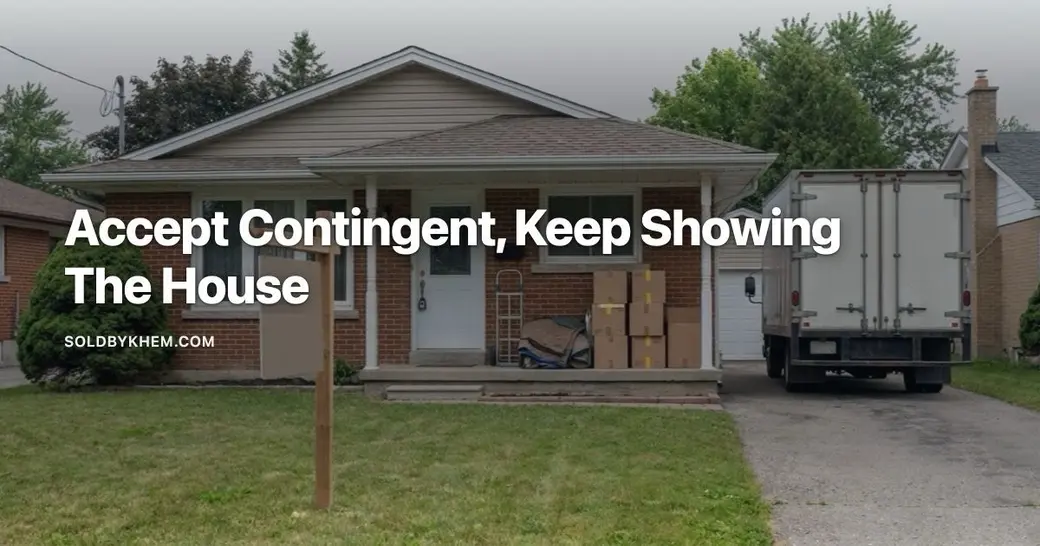
What is a kick out clause on a contingent offer in Monroe County NY?
A kick out clause lets a Monroe County seller accept an offer that depends on the buyer selling their own home, while keeping the house on the market. If a second buyer makes an acceptable offer, the seller gives the first buyer written notice. That buyer then has a set window to remove the contingency or release the contract.
A contingent offer asks you to do something uncomfortable: take your house off the open market and wait while someone else sells theirs. A kick out clause is the compromise. It lets you sign the contract and keep showing the house at the same time. If a stronger offer turns up, you can push the first buyer to either commit or step aside.
This post covers what the clause actually does in a Monroe County contract, the exact sequence of events when you use it, the terms worth negotiating before you sign, and the real risks that nobody mentions until they bite. If you are weighing a contingent offer in Henrietta, Pittsford, Brighton, Rush or Honeoye Falls, this is the part of the deal to get right.
What is a kick out clause in New York real estate?
A kick out clause is a provision written into an accepted purchase contract that allows the seller to continue marketing the property and to terminate the contract if the buyer cannot remove their home sale contingency within an agreed notice period. It is sometimes called a bump clause or a right of first refusal to the buyer, depending on how it is drafted.
It only shows up alongside a sale of home contingency. That contingency says the buyer's obligation to close depends on their current house selling, and usually closing, first. Without a kick out clause, you are simply waiting on a house you do not control, in a market you cannot see, for a buyer you have never met.
New York is an attorney state. The clause language will be reviewed, and frequently rewritten, during the attorney approval period after both sides sign. That is a feature, not a delay. A kick out clause written loosely is worth very little, and this is the point in the process where it gets tightened.
How the kick out process actually runs
The mechanics are simple once you see them in order:
- You accept the contingent offer. The contract is signed, the deposit is held, and attorney approval runs its course.
- The listing keeps showing. Your agent updates the status so the market knows there is an accepted offer with a continuing-to-show provision. Showings, open houses and new offers continue.
- A second buyer writes an offer you would accept. Usually you accept it as a backup, subject to the first contract terminating.
- You deliver written notice. Your attorney or agent serves the first buyer formal notice under the kick out clause. The clock starts on delivery, exactly as the contract defines delivery.
- The first buyer chooses. They either remove the sale of home contingency and proceed, typically with an additional deposit and proof they can close without selling first, or they release the contract and their deposit is returned under the contract terms.
- One contract survives. If the first buyer removes the contingency, the backup offer falls away. If they release, the backup moves into first position.
Notice what the clause does not do. It does not let you take a better offer just because you like it more. You have to follow the notice procedure, in writing, on the timeline the contract sets. Skipping that step is how sellers end up with two live contracts and a legal problem.
Should you accept a contingent offer with a kick out clause?
It depends on what the contingent offer is paying you for the wait. A contingent offer at or below what a clean offer would bring is not worth the complication. A contingent offer that is meaningfully higher, from a buyer whose own house is already under contract with inspections cleared, is a different conversation.
Ask these questions before you sign anything:
- Is the buyer's house listed, under contract, or neither? Neither is the weakest position by a wide margin.
- If it is under contract, has the inspection period passed and has their buyer's mortgage commitment been issued?
- Where is their house and what is it? A property that competes with a thin pool of similar listings behaves differently than one in a crowded price band.
- What does their agent say about showing traffic and offers to date?
- Can the buyer close without selling, using a bridge loan or other funds, if pushed?
That last answer tells you what your kick out clause is really worth. A buyer who can remove the contingency under pressure will do exactly that, and your notice becomes a way of accelerating them rather than replacing them.
The three ways a seller can handle this
| Offer structure | What you give up | What you keep |
|---|---|---|
| Non-contingent offer | Possibly a higher headline price from a contingent buyer | A closing date you can plan around and a single set of moving parts |
| Contingent offer with a kick out clause | Some marketing momentum, since new buyers know there is an accepted offer | The right to keep showing and to force a decision when a better offer arrives |
| Contingent offer with no kick out clause | Control of your own timeline until the buyer's house sells | Only the price and terms you negotiated, and the buyer's good faith |
Terms worth fighting for before you sign
The clause is only as strong as its details. These are the ones that matter in practice:
- The notice window. There is no standard length in New York. It is whatever the two parties write. Shorter favors you. Longer favors the buyer. Know what you agreed to before you serve notice.
- How notice is delivered. Email to the attorney, certified mail, hand delivery: define it, because the clock starts on delivery.
- What removing the contingency requires. A signed waiver alone is weak. Ask for an additional deposit and written proof of funds or bridge financing.
- What triggers your right to send notice. Usually a bona fide written backup offer that you would accept. Define bona fide.
- Whether the buyer can re-add the contingency later. They should not be able to.
- Deposit treatment on release. Spell it out so the release is clean and nobody argues about escrow.
What the current market means for this decision
Supply in the Rochester area has been tight rather than loose through the most recent data I can verify. Zillow's index had homes in the city of Rochester going to pending in roughly eight days, in data stamped June 30, 2026. Monroe County's average home value on that same index was $285,439, up 4.1% year over year, though that county figure was stamped April 30, 2026 and is older than it looks.
Be careful with headline numbers here. Different sources are measuring different things. One aggregator's July 2026 page for Rochester showed a median sale price up 17.95% year over year with 51 median days on market and homes selling at 120.57% of asking, figures that cannot all describe the same market. At town level the sample gets thinner still: West Henrietta showed roughly 19 to 20 active listings across two independent aggregators, which is far too few for any median to mean much month to month. Comparable sales on your street beat any of it.
Borrowing costs cut the other way. Freddie Mac's survey put the 30-year fixed at 6.76% for the week of September 10, 2026, up from 6.71% the prior week and 6.66% the week of August 27, 2026. Rising rates squeeze the buyer whose own sale is still pending, and a squeezed buyer is a buyer more likely to release than to remove. Price your patience accordingly.
The honest risks
A kick out clause does not guarantee a second offer will show up. In a low inventory pocket it often does. In a house with a narrow buyer pool, a long stretch of showings with no offers is a real possibility, and you will have spent that time attached to a buyer who still has not sold.
Continued marketing also carries a signal. Some buyers skip a listing that already has an accepted offer rather than write what they assume is a losing bid. Your agent's job is to make clear the house is genuinely available and how the process works.
And the clause creates work. Serving notice correctly, coordinating two attorneys, keeping a backup buyer warm without over-promising: none of it is difficult, but all of it has to be done in the right order.
Common questions
How long does a buyer have to respond to a kick out notice?
There is no standard period in New York. The length is negotiated and written into the contract, and it can be measured in hours or in business days. Read your own clause before you serve notice, and confirm the delivery method the contract requires, because the countdown starts when notice is properly delivered, not when you decide to send it.
Does the buyer lose their deposit if they get kicked out?
No, not in a normally drafted contract. If the buyer cannot remove the sale of home contingency within the notice period, the contract terminates by its own terms and the deposit is returned. This is a release, not a default. Have your attorney confirm the deposit language before signing so the escrow release is straightforward.
Can I accept a second offer while the first contract is still active?
You can accept it as a backup offer, made expressly contingent on the first contract terminating. What you cannot do is treat both as primary. Accepting a second offer outright while a signed contract is in force exposes you to a claim from the first buyer, which is precisely why the notice procedure exists.
Does a kick out clause hurt my days on market?
The listing generally keeps accruing days on market while it continues to show, which is one of the real costs of this structure. Weigh that against the alternative, which is going fully pending on a contract that may not close and then relisting later with a longer gap to explain. Your agent should track how the status displays so buyers understand the house is still available.
Does the buyer's loan type change how a kick out clause works?
No. A sale of home contingency and a mortgage contingency are separate provisions. A buyer using FHA, VA or conventional financing can carry a home sale contingency, and the kick out clause operates the same way in each case. What matters is whether that buyer has the funds or bridge financing to close without selling first.
If you have a contingent offer in front of you and you are not sure what it is really worth, I will walk through the contract language and the comparable sales with you before you sign anything. Book a time with me here and bring the offer.
Khem Kadariya
About this data
The figures in this post were compiled from publicly available sources including Zillow, FRED (Federal Reserve Bank of St. Louis), the Rochester Business Journal, Houzeo and Redfin, along with other public market data. Real estate numbers change quickly, and these were accurate as of September 2026. For current figures on a specific home, street, or town, ask me directly rather than relying on a published average.
Keep reading
Buying After You Sell?
If your move involves buying as well as selling, the financing side is worth lining up early.
I recommend connecting with my preferred lending partner, Brian Haefner with Premium Mortgage Corporation.
Stay Connected With Khem
Looking for more Rochester real estate information, community updates and local insight?
Thinking about selling in Greater Rochester? contact Khem for a conversation about pricing, preparation and current buyer demand.
Recent Posts







Khem Kadariya
Phone