
Solar lease transfer in Victor NY: a buyer's checklist
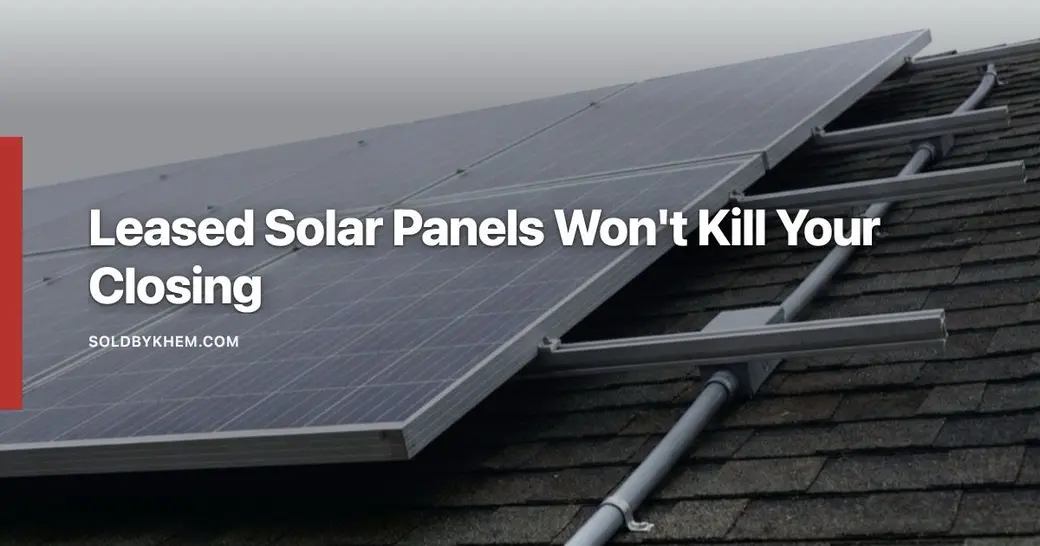
Can I buy a house in Victor NY that has leased solar panels?
Yes. You either assume the existing solar lease, which requires credit approval from the solar company, or the seller pays it off at closing so the panels transfer free and clear. Start the paperwork during attorney approval, because the solar company's transfer process and any UCC filing on title both take time.
Leased solar panels show up regularly on Victor and Farmington listings, and they scare buyers more than they should. They are not a reason to walk away. They are a reason to read three documents and start a phone call earlier than you otherwise would.
This post covers what a leased system actually is, who has to approve the transfer to you, what your lender and title company will ask for, what to look at on the roof and in the attic, and how to keep the whole thing from delaying your closing. I will also tell you where these deals usually go sideways.
What does "leased solar" actually mean on a listing?
It means the panels on the roof belong to someone other than the homeowner, and there is a contract attached to the house that you will be expected to take over. Listing sheets are casual about this. "Solar" in the remarks can mean four completely different situations, and the difference decides whether you owe a monthly payment for years or own the equipment outright on day one.
| Arrangement | Who owns the panels | What passes to you | First thing to check |
|---|---|---|---|
| Lease | The solar company | A monthly payment for the remaining term, plus maintenance obligations | Remaining term, monthly amount, and whether the payment escalates each year |
| Power purchase agreement (PPA) | The solar company | An obligation to buy the power the system produces at a set rate per kilowatt hour | The rate, the escalator, and any minimum production guarantee |
| Solar loan | The homeowner owns the panels, a lender holds the debt | Nothing, if the seller pays it off. Everything, if you agree to assume it | Whether there is a lien or UCC filing that has to be cleared at closing |
| Owned outright | The homeowner | The equipment, plus any remaining workmanship or inverter warranty | Age of the inverter and whether warranties are transferable |
Get this classified before you write an offer. "Seller says it is paid off" is not classification. A document is.
Which documents should you ask for before your contingency period ends?
Ask for the full executed contract, the most recent solar bill, and the most recent utility bill, and read them together. Those three items answer nearly every question a buyer has.
- The signed lease or PPA, all pages including exhibits. The exhibits hold the escalator, the buyout schedule, the transfer conditions and the end of term options.
- The most recent invoice from the solar provider. This tells you the real payment, not the payment the seller remembers.
- The most recent electric bill. You want to see what the house still pays the utility on top of the solar payment. Some homes carry both a solar bill and a meaningful utility bill.
- The transfer packet from the solar company. Every provider has one. Ask the seller to request it the day your offer is accepted.
- The interconnection and net metering paperwork. The utility account has to be moved into your name and the net metering arrangement reassigned, which is a separate step from the lease transfer.
- Roof documentation. Age of the roof, any warranty affected by the panel mounts, and any roof work done since installation.
If the seller cannot produce the contract, the solar company can, but only with the seller's authorization. That request alone can take a week. This is why we start on day one.
Who has to approve the transfer?
The solar company does. A leased solar panels home sale is not a private matter between buyer and seller. The provider reviews your credit, issues a transfer agreement, and only then releases the seller from the contract. Two practical consequences follow. First, a solar lease transfer in NY can be declined, so you want to know your standing before you remove contingencies. Second, the provider sets the calendar, not your attorney, and providers work at their own pace in August as well as December.
There are usually three exits if assumption is not a fit:
- Seller buys out the lease at closing. The buyout figure comes from the schedule in the contract. The panels then convey with the house, and you should get written confirmation the obligation is terminated.
- Seller prepays the remaining payments. Some contracts allow this. It leaves the system in place with nothing owed monthly.
- Seller has the system removed. This is the rare option, and it raises roof repair questions that belong in writing before closing, not after.
How does the solar lease affect your mortgage?
The lease payment is a recurring obligation, so expect your lender to count it, and expect a UCC filing to come up on title. Both are routine, and both cost you time if you find them late.
On the loan side, plan for the monthly solar payment to sit in your debt to income calculation alongside the mortgage, taxes and insurance. That matters more when borrowing costs are elevated: Freddie Mac's Primary Mortgage Market Survey put the 30 year fixed rate at 6.66% on August 27, 2026, up from 6.56% a year earlier. There is not much slack in most approvals at that level, so tell your loan officer about the solar payment before you are under contract, not after the appraisal.
On the title side, many providers record a UCC-1 fixture filing against the property to protect their equipment. Your title company will find it. It is not a mortgage lien, but it has to be addressed, either by subordination, by a lender-acceptable acknowledgment, or by termination if the seller is buying the system out. Some loan programs have specific requirements about that filing and about whether the panels can be included in the appraised value. Ask the underwriter early.
One more appraisal note. A leased system generally does not add appraised value the way an owned system might, because you do not own it. Do not pay a premium for panels you will be making payments on.
What to look at on the roof and in the attic
I have been in enough Victor NY solar homes to know the panels are rarely the problem. The penetrations and the paperwork are.
- Roof age under the array. If the shingles are near the end of their life, someone pays to remove and reset the panels when the roof is replaced. Find out who, in writing.
- Flashing at the mounts. Ask your inspector to look at the attic sheathing under the array for staining, and to check the mounts from a ladder if the pitch allows.
- Inverter age and location. Inverters do not last as long as panels. Note the install date and who covers replacement under the lease.
- Snow and shade. Western New York winters load a roof, and mature trees on older Victor lots shade arrays more than a summer showing suggests. Production history from the monitoring app tells you more than a walkthrough.
- Monitoring access. Ask the seller to transfer the monitoring login. Without it you cannot see whether the system is performing.
A workable timeline
Treat the solar transfer as a parallel track that begins the moment your offer is accepted.
- Days 1 to 3: seller requests the transfer packet and sends you the executed contract and recent bills.
- During attorney approval and inspection: you read the contract, your inspector looks at the roof and attic, and your loan officer confirms how the payment and any UCC filing affect your approval.
- After contingencies: you submit the transfer application, title runs its search, and any buyout figure gets locked into the closing statement.
- Week of closing: confirm in writing that the transfer is approved or the buyout is funded, and schedule the utility account and net metering change for your closing date.
Deals stall when nobody owns the solar file. Assign it. Usually that is me, working with your attorney, because I know which questions the provider will answer on the first call.
Common questions
Can a solar lease stop a sale from closing?
It can delay one, and occasionally it does end one. The two common causes are a transfer application that is not approved and a UCC fixture filing discovered too late to resolve before the closing date. Both are avoidable by requesting the contract and the transfer packet in the first week after acceptance.
Should I ask the seller to buy out the solar lease?
It is a fair ask, and it is often the cleanest outcome, but it is a price negotiation like any other. The buyout number comes from the schedule inside the contract, so read that before you name a figure. If the seller will not buy it out, decide whether the monthly payment plus your expected utility bill is a cost you accept for that house.
Do leased solar panels lower a home's value in Victor or Farmington?
They do not automatically lower it, but they rarely add the value an owned system might, because the equipment is not yours. Buyers price the payment, not the panels. A short remaining term with a modest payment reads very differently from a long term with an annual escalator, which is why the contract matters more than the hardware.
Who is responsible for repairs while the panels are leased?
The provider usually is, and the specifics live in the maintenance section of the lease. Read what is covered, what response time is promised, and what happens if production falls short of any guarantee. Also confirm who pays to remove and reinstall the array if the roof needs replacing.
What if the seller says the panels are paid off?
Verify it with a document, either a termination of the lease, a paid in full statement from the lender, or a recorded termination of the UCC filing. Your title company will need the same proof. A verbal assurance is not something your lender can close on.
If you are looking at a home in Victor or Farmington with panels on the roof and you want a straight read on the contract before you commit, book a time with me, Khem Kadariya. Bring the listing address and any solar paperwork you have, and we will work out what it costs you and what to ask the seller for.
About this data
The figures in this post were compiled from publicly available sources including Zillow, Houzeo, Movoto, RochesterFirst and FRED (Federal Reserve Bank of St. Louis), along with other public market data. Real estate numbers change quickly, and these were accurate as of September 2026. For current figures on a specific home, street, or town, ask me directly rather than relying on a published average.
Need Help With Financing?
Thinking about buying a home and wondering what financing options may be available to you? Knowing where you stand before you write an offer puts you in a much stronger position.
I recommend connecting with my preferred lending partner, Brian Haefner with Premium Mortgage Corporation. Whether you are a first-time homebuyer, relocating to the Rochester area, purchasing your next home, or simply want to understand your mortgage options and buying power, Brian can help you explore your financing options and answer your mortgage-related questions.
Stay Connected With Khem
Looking for more Rochester real estate information, community updates and local insight?
- search Rochester homes for sale
- the Rochester home buyer guide
- see more Rochester content on Instagram
Thinking about buying in the Rochester area? talk with Khem to talk through neighborhoods, financing and current inventory.
Recent Posts







Khem Kadariya
Phone