
Sump pumps and wet basements in Gates NY homes
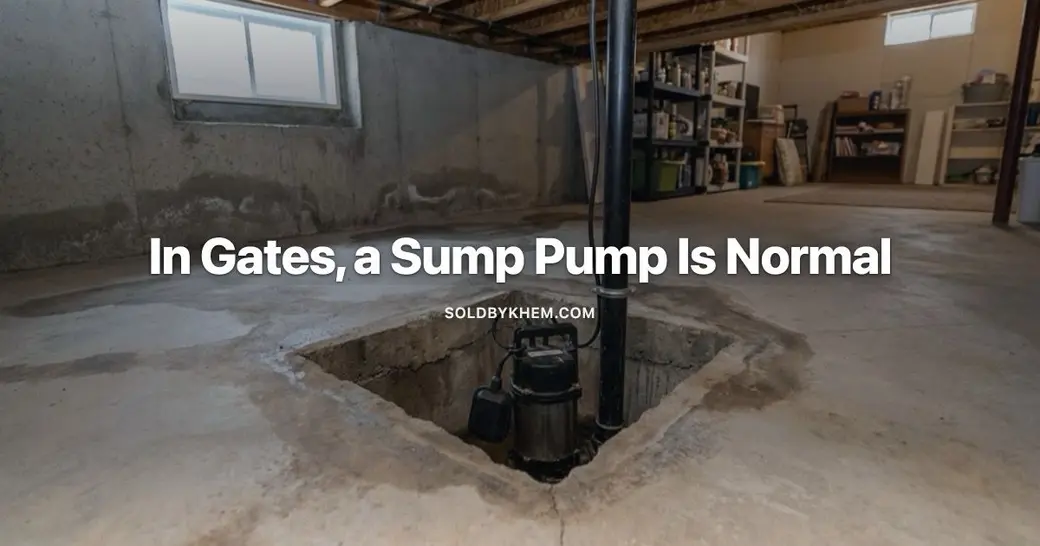
Why do so many homes in Gates NY have sump pumps in the basement?
Gates sits on heavy clay soil with flat lots and a shallow water table, so rain and snowmelt drain slowly and press against foundation walls. Many homes built from the 1950s onward were finished with block walls and perimeter drains that feed a sump pit. A pump is normal equipment here, not evidence of a defect.
If you are touring homes in Gates or Chili, you will see sump pumps. A lot of them. You will also see chalky white lines on block walls, a rust ring in the corner of a finished room, and a dehumidifier running in August. This post explains what those signs mean, which ones matter, what a sump pump actually does, what to ask the seller, and how to price out repairs before you commit. I have stood in a lot of these basements. Most of what scares buyers is manageable. Some of it is not, and the difference is usually visible in ten minutes if you know where to look.
Why do so many Gates and Chili basements take on water?
Because of the soil and the shape of the land, not because the houses were built badly. Much of western Monroe County sits on heavy clay with pockets of silt. Clay holds water instead of letting it pass through. Lots in the postwar neighborhoods off Buffalo Road, Chili Avenue, Lyell Road and Spencerport Road are flat, which means rain and snowmelt sit and soak instead of running off. Add a shallow water table and low ground near creeks and drainage channels, and you get seasonal pressure against foundation walls every spring.
Then there is the building stock. A large share of homes in Gates and Chili were built between the 1950s and the 1980s, with poured or concrete block foundations and a perimeter drain tile that empties into a sump pit. That system was designed to manage water, not to keep it away from the house entirely. Sixty years later the tile can be partly silted in, the pump may be its second or third replacement, and the original grading has settled toward the house.
Two other things do a lot of damage quietly:
- Downspouts that dump at the wall. A roof sheds an enormous volume of water in a Rochester thunderstorm. If it lands two feet from the foundation, it goes into the basement.
- Freeze and thaw. Our winters push and pull on soil and walls all season. That is how hairline cracks in block joints become paths for water by March.
What a sump pump actually does, and what it does not do
A sump pump removes water that has already reached the perimeter of your basement. It does not waterproof anything. It does not stop water from entering. It lowers the water level in the pit so pressure does not build up under the slab and behind the walls.
That distinction matters when you are evaluating a house. A basement with a working pump, a sealed pit lid, a discharge line running well away from the foundation, and dry walls is functioning as designed. A basement with a pump and standing water on the floor has a second problem the pump was never meant to solve.
Things worth checking on the pump itself:
- Does it run when you lift the float? Ask before you touch anything.
- Is the discharge pipe frozen-proofed and directed away from the house, not into a window well or back at the wall?
- Is there a check valve so water does not drain back into the pit?
- Is it plugged into a dedicated outlet, or sharing an extension cord with a freezer?
- Is there a battery backup or a water-powered backup? Power outages and heavy rain arrive together here more often than anyone would like.
What to look for at a showing
You get maybe thirty minutes in a house. Spend eight of them in the basement with your phone flashlight on.
| What you see | Likely cause | Usual first step |
|---|---|---|
| White chalky residue on block walls | Efflorescence, mineral salts left behind by water passing through the block | Trace the source outside: gutters, grading, window wells |
| Horizontal rust or stain line a few inches off the floor | Water has stood on the floor at some point | Ask how often, how deep, and when it last happened |
| Fresh paint or sealer on the lower walls only | Cosmetic cover of a known seepage area | Full inspection, and ask for repair records |
| Stair-step cracking in block joints | Movement, sometimes from hydrostatic pressure | Structural engineer, not a waterproofing salesperson |
| Finished basement with new flooring and no visible pit | Could be nothing. Could be a covered problem | Ask directly where the sump is and whether the drain tile was kept |
| Musty smell with a dehumidifier running | Chronic humidity, often from slab moisture | Moisture reading, check for mold in framing and storage |
Also walk the outside. Look at where downspouts end. Look for soil sloping toward the house. Look at window wells for leaves and standing water. Look at the driveway and walkway for settling that channels water toward the foundation. Half the answers to basement water in Rochester homes are found in the yard, not the basement.
Should a wet basement stop you from buying the house?
Usually not, if you know what the fix costs and who is paying for it. A wet basement in Gates NY is a pricing and scope question far more often than it is a walk-away question. What changes that answer is structural movement, a finished basement with hidden mold behind the walls, or a seller who will not talk about a problem the house obviously has.
Here is the order I suggest buyers work in, cheapest and most effective first:
- Water management outside. Extend downspouts, clean gutters, regrade the first six to ten feet away from the foundation, fix window wells. Many homes stop leaking after this alone.
- Pump and backup. Replace an aging pump, add a sealed lid, add battery backup, correct the discharge run.
- Interior perimeter drain. If water still comes through the wall or floor joint, a new interior drain tile to the pit is the standard remedy in Monroe County housing stock.
- Exterior excavation and membrane. The big one. Reserved for real structural or persistent problems, and it belongs in a negotiation, not a punch list.
Get two written quotes during your inspection contingency period. Not estimates over the phone. Written, itemized, with the scope spelled out. That is what gives you something concrete to negotiate with, and it protects you if the seller says the problem is minor.
What to ask the seller and their agent
Ask specific questions, because vague ones get vague answers.
- When did water last enter the basement, and how much?
- How old is the sump pump, and who installed it?
- Has drain tile ever been added, and is there a receipt or a warranty?
- Was any waterproofing work done, and is the warranty transferable?
- Has the basement ever been treated for mold?
In New York, sellers complete a property condition disclosure statement, and your agent should walk you through what it says about water and drainage. A disclosure is not a guarantee, and it does not replace an inspection. But a seller who reports past water and hands you the receipts is telling you something useful. So is one who leaves it blank while the basement wall is freshly painted to a straight line four feet up.
If you are selling a Gates or Chili home with a history of water
Fix the cheap things and document everything. Extended downspouts, corrected grading, a new pump with a backup, and a clean dry basement floor on inspection day are worth more than any explanation you can offer at the kitchen table. Keep the invoices in a folder on the counter. Buyers in this market expect a sump pump. What they do not tolerate is the feeling that something is being hidden, and that feeling costs more in renegotiation than the repair would have cost up front.
Common questions
Does every house in Gates NY need a sump pump?
No, but most homes with a full basement in Gates and Chili have one, and its presence is not a red flag. Homes on higher ground or with well-draining soil sometimes stay dry without one. If a basement here has no pump and no pit at all, ask whether the perimeter drain was ever installed or whether it was removed during a finishing project.
Can I get a mortgage on a house with basement water?
Generally yes for conventional financing, as long as there is no structural damage and the house is habitable. Appraisers and government-backed loan programs pay closer attention to active leaks, mold and compromised foundation walls, and an appraiser can require repairs before closing. Talk to your lender early if you already know the basement takes water, so the appraisal does not surprise you.
Do I need a battery backup for a sump pump in Monroe County?
It is one of the better small investments in a Rochester home. Our heaviest rain often comes with wind and power outages, and a sump pump without electricity is a decoration. A battery or water-powered backup keeps the pit clear during the exact hours you need it most.
Should I hire a home inspector or a waterproofing company first?
Start with an independent home inspector who is paid for their opinion, not for selling a system. If the inspector flags active seepage or movement, then bring in a waterproofing contractor for a scope and a price, and a structural engineer if walls are cracked or bowing. Two quotes from two companies keeps the numbers honest.
Is a spring puddle the same problem as a leaking wall?
Not usually. A small amount of water near the pit during heavy snowmelt often means the system is doing its job. Water tracking down a wall, entering at the floor joint around the perimeter, or appearing after ordinary rain points to a drainage or drain tile problem that needs a real fix.
Want a second set of eyes in the basement?
I walk these houses every week and I will tell you plainly what I see, including the parts that argue against buying. If you are looking in Gates, Chili or anywhere in south and southeast Monroe County, book a time with me here and we will go through the specific address you are considering.
Khem Kadariya, Sold By Khem
About this data
The figures in this post were compiled from publicly available sources including Houzeo, Zillow, RochesterFirst, Redfin and FRED (Federal Reserve Bank of St. Louis), along with other public market data. Real estate numbers change quickly, and these were accurate as of August 2026. For current figures on a specific home, street, or town, ask me directly rather than relying on a published average.
Need Help With Financing?
Thinking about buying a home and wondering what financing options may be available to you? Knowing where you stand before you write an offer puts you in a much stronger position.
I recommend connecting with my preferred lending partner, Brian Haefner with Premium Mortgage Corporation. Whether you are a first-time homebuyer, relocating to the Rochester area, purchasing your next home, or simply want to understand your mortgage options and buying power, Brian can help you explore your financing options and answer your mortgage-related questions.
Stay Connected With Khem
Looking for more Rochester real estate information, community updates and local insight?
- browse current Rochester listings
- download the Rochester Relocation Guide
- Rochester updates on Instagram
Have a question about Rochester real estate? talk with Khem and we can talk it through.
Recent Posts








Khem Kadariya
Phone