
Perinton condo reserve studies and special assessment risk
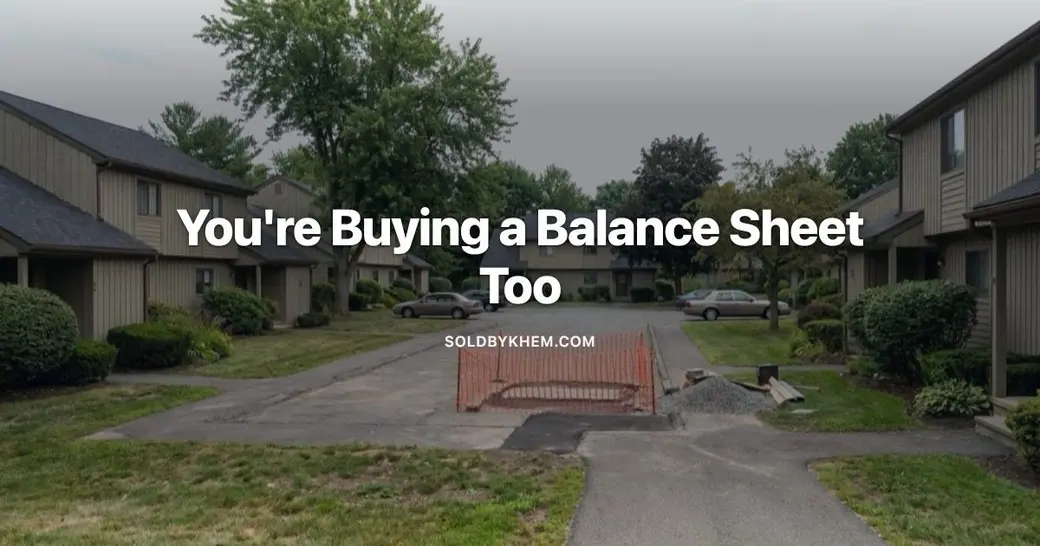
What should I check about a condo association's reserves before buying in Perinton NY?
Ask the association for its reserve study or engineering report, the last three annual budgets, the current reserve balance, two years of board meeting minutes, the master insurance certificate with its deductible, and written confirmation of any pending special assessment. In Perinton and Fairport, roofs, siding and private asphalt are the items that most often trigger assessments.
When you buy a condo in Perinton or the Village of Fairport, you are buying two things: a unit and a share of a balance sheet. The unit you can see. The balance sheet you have to ask for. This post explains what a reserve study is, why plenty of associations around here do not have a current one, how special assessments get levied, exactly which documents to request during your attorney approval period, and how to price the risk if the reserve fund looks thin. None of this is legal advice. Your attorney reads the documents. Your job is knowing what to put in front of them and what to ask about what is missing.
What is a condo reserve study, and does every association have one?
A reserve study is a specialist's inventory of everything the association owns in common, with a remaining life and a replacement cost attached to each item, plus a funding plan to pay for it. A proper one covers roofs, siding, windows and doors if they are common, private roads and parking areas, sidewalks, decks and balconies, retaining walls, drainage, boilers, water and sewer laterals, elevators, and any pool or clubhouse. The study then says how much the association should be setting aside each year so the money is there when the roof is not.
No, not every association has one. Searching for a condo reserve study in NY will turn up a lot of writing about states that mandate them on a fixed cycle. Do not assume that applies to the association you are looking at. Around Perinton and Fairport, a good number of smaller associations budget year to year, self-manage, and have never commissioned a formal study. That is not automatically a disqualifier. It does mean you are working with less information, and you should price that.
Three questions settle it fast:
- Is there a reserve study or engineering report, and what is its date?
- Who prepared it, and has it been updated since?
- Does the annual budget follow the funding plan the study recommended, or something lower?
Where do special assessments actually come from?
A special assessment is a charge levied on unit owners, on top of monthly common charges, when reserves cannot cover a project the association has to do. It can arrive as one lump sum or as a surcharge spread over several years. The board votes it, allocated by each unit's percentage of common interest, so a larger unit usually pays more than a smaller one.
The triggers repeat themselves. In condo and townhouse communities of the vintage you see across southeast Monroe County, the usual causes are:
- Roofs. Whole sections of a complex were often built in the same year, so they age out together rather than one building at a time.
- Asphalt. Private drives and parking courts are the association's problem, not the town's. Repaving is expensive and easy to defer.
- Siding, trim and decks. Deferred maintenance here tends to turn into water intrusion, which turns into a bigger number.
- Insurance. A rising master policy premium squeezes the operating budget, and a large deductible after a storm or water loss can land on owners directly.
- Water and sewer lines. Shared laterals under a common driveway are one of the least visible and least budgeted risks in an older complex.
- Litigation or a construction defect claim. Legal costs come out of the same pot.
Which documents should you request, and what does each one tell you?
Ask for all of it in writing, in one request, at the start of your attorney approval period. Do not accept a summary sheet from a listing agent as a substitute.
| Document | What it tells you |
|---|---|
| Reserve study or engineering report | The big-ticket list, remaining life on each item, and whether the association knows what is coming |
| Current budget plus the last two or three | Whether common charges are keeping pace with costs, and how much is going to reserves |
| Reserve account balance or statement | The actual cash on hand, not the target |
| Board and annual meeting minutes, 24 months | Projects discussed, bids received, votes deferred, arguments about money |
| Audited or reviewed financials | Whether operating money has been borrowed from reserves |
| Delinquency report | How many owners are behind, which affects everyone else's share |
| Master insurance certificate | Coverage limits and the deductible that could be passed through to owners |
| Offering plan, bylaws and rules | Assessment powers, rental limits, pet and parking rules, resale conditions |
| Written statement on pending assessments and litigation | The single most important sentence in the whole package |
How to tell whether the reserves are funded
Do not judge it by a percentage that sounds respectable. Do the subtraction. Take the reserve balance, then take the items in the study due within the next five years and their estimated costs. Add the annual contribution multiplied by those five years. If the money coming in plus the money on hand does not reach the projects on the list, the gap is either a special assessment, a bank loan repaid through higher common charges, or another year of deferral. One of those three is going to happen, and you will own a share of it.
Then look at the minutes for tone. Boards that raise common charges by small amounts regularly are usually the ones that avoid five-figure surprises. Boards that have held charges flat for years are often the ones that end up voting an assessment.
What I look at walking a complex in Perinton or Fairport
Documents tell you the plan. A walk tells you whether the plan is being followed.
- Patch on patch in the parking areas, and standing water after rain, which points to base failure rather than a surface fix
- Roofs that all look the same age across every building
- Soft decking, spongy stair treads, rusted railing anchors
- Grade sloping toward foundations, and downspouts discharging next to the slab
- Failing caulk at window and door openings, and staining below siding joints
- Landscaping and snow storage areas that show the same corners being cut every season
Ask who does the plowing and who salts the walks. In this climate that contract is a real line item, and it is one of the first things a stretched budget trims.
How reserves affect your loan and your monthly number
Lenders care about association finances as much as you do. On a condo, your loan officer typically sends the association a project questionnaire covering the budget, the reserve allocation, owner occupancy, delinquency levels and any pending assessment or litigation. A weak answer can move a project from routine financing to a narrower set of options. Ask your loan officer early what their current thresholds are, before you have a signed contract and a clock running.
Cost matters more when borrowing is not cheap. Freddie Mac reported the 30 year fixed rate at 6.66% on August 27, 2026, compared with 6.56% a year earlier. Common charges and any assessment surcharge sit on top of principal, interest, taxes and insurance in a lender's calculation, so a $150 monthly increase is not a rounding error. Condos also draw more interest when prices climb: NYSAR data reported by Rochester Business Journal on June 26, 2026 put the Monroe County median sales price above $300,000 in May 2026, up 7.9% from $286,000 a year earlier. Competition for the lower-priced attached homes tends to follow that, which is exactly when buyers start skipping document review to move fast. Do not.
What if the reserves are thin and you still want the unit?
Underfunded does not mean unbuyable. It means you negotiate with information. Options that work in practice:
- If an assessment has already been voted, get it in writing and negotiate who pays which installments at closing
- Use the study's near-term list as the basis for a price adjustment or a seller credit
- Require a written statement from the board or management that no further assessment is pending as of the closing date
- Budget your own sinking fund for the likely share, and treat it as part of your carrying cost
- Walk, if the minutes show a board that will not fund or will not disclose
If you want a second set of eyes on a condo package before your attorney approval period runs out, send it over and I will read it with you, line by line, and tell you plainly what I see. Book a time with me here and bring the budget and the minutes.
Common questions
Who pays a special assessment, the buyer or the seller?
It depends on what the contract says and when the assessment was levied. If the board voted it before closing, the parties usually negotiate whether the seller pays it off, credits the buyer, or the remaining installments transfer with the unit. If it is voted after closing, it is yours. Get the allocation written into the contract rather than agreed by handshake.
Does every condo association in New York have to do a reserve study?
Do not assume so. Some states require studies on a set schedule, and coverage written for those states circulates widely online. In this market you will find associations with a recent engineering report, associations with a decade-old one, and associations with none at all. Ask for the document and its date, and have your attorney confirm what the offering plan and bylaws require of the board.
Can I get a mortgage on a condo with a pending special assessment?
Often yes, but it changes the conversation. Lenders want to know the amount, the reason, the payment schedule and whether reserves cover any of it. A large assessment for a structural problem is viewed differently from a planned repaving. Tell your loan officer the day you learn about it, not the week before closing.
How much should I set aside for assessment risk?
There is no reliable rule of thumb, so build the number from the association's own documents. Take the projects due in the next five years, divide by the number of units, and weight it by your percentage of common interest. If no study exists, ask what the last three capital projects cost and what each owner paid. That history is the best available guide.
Is a townhouse HOA safer than a condo association?
Not inherently. What matters is what the association is responsible for maintaining and whether it has money set aside for it. Some townhouse associations maintain only lawns and roads, which is a small, predictable budget. Others maintain roofs and siding, which is the expensive part. Read the declaration to see exactly where your responsibility stops and the association's begins.
About this data
The figures in this post were compiled from publicly available sources including Zillow, Houzeo, Movoto, RochesterFirst and FRED (Federal Reserve Bank of St. Louis), along with other public market data. Real estate numbers change quickly, and these were accurate as of September 2026. For current figures on a specific home, street, or town, ask me directly rather than relying on a published average.
Need Help With Financing?
Thinking about buying a home and wondering what financing options may be available to you? Knowing where you stand before you write an offer puts you in a much stronger position.
I recommend connecting with my preferred lending partner, Brian Haefner with Premium Mortgage Corporation. Whether you are a first-time homebuyer, relocating to the Rochester area, purchasing your next home, or simply want to understand your mortgage options and buying power, Brian can help you explore your financing options and answer your mortgage-related questions.
Stay Connected With Khem
Looking for more Rochester real estate information, community updates and local insight?
Thinking about buying in the Rochester area? start a conversation with Khem to talk through neighborhoods, financing and current inventory.
Recent Posts






Khem Kadariya
Phone