
Penfield NY Standby Generator Permit Requirements
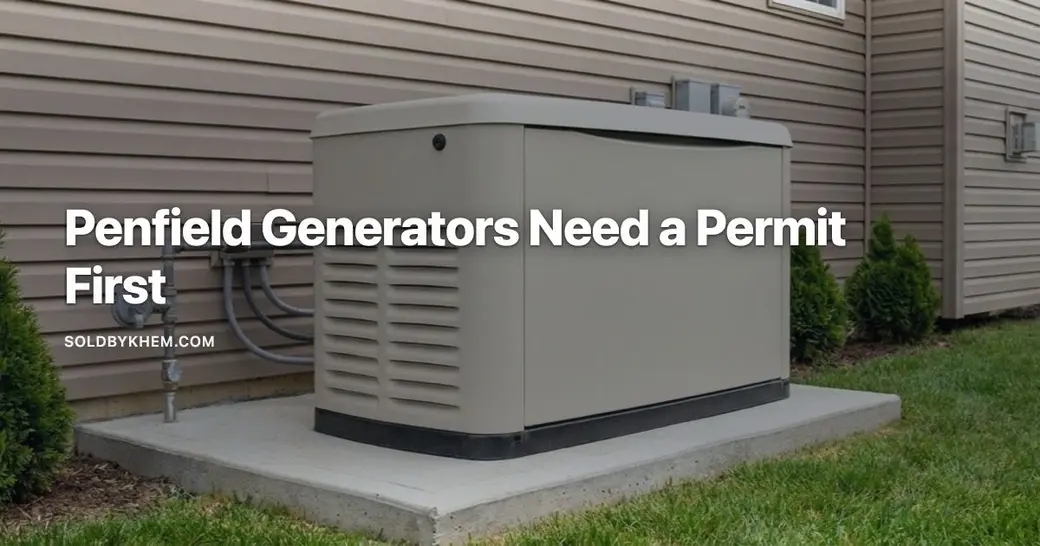
What does the Town of Penfield NY require before a permanent standby generator is installed at a house?
The Town of Penfield requires a building permit before any permanently installed standby generator is set. Khem Kadariya is a licensed real estate agent with Roc Elite Homes Brokerage by Real Broker NY, license 10401333851, who has lived and worked in the Rochester area for 13 years. The Fuel Burning Appliance Permit Application asks for manufacturer installation instructions, a survey map showing where the unit sits, RG&E gas paperwork and proof of contractor insurance.
The document Penfield uses for this is not a generic building permit form. It is the Fuel Burning Appliance Permit Application, the same application the town uses for gas fireplaces, furnaces and other gas fired equipment, and the Town of Penfield Building and Zoning Department publishes it along with the rest of its permit forms on the town website. Start there before your installer schedules anything, because the permit governs where the unit can sit, and where it sits determines how much trenching and gas piping the job needs.
The short version: the town wants to know what you are installing, what the manufacturer says about how it must be installed, exactly where on the lot it will sit, whether the gas supply can carry it, and who is doing the work.
What does the Fuel Burning Appliance Permit Application ask for?
A standby generator application in Penfield is a package, not a single sheet. The application form itself is the cover, and the attachments do most of the work of proving the install is legal. Expect to assemble the following before you submit.
- The completed Fuel Burning Appliance Permit Application, with the generator's make, model and BTU input filled in.
- The manufacturer's installation instructions for that exact model.
- A survey map of your property with the generator location marked and the distance from the house written in.
- RG&E natural gas appliance inventory paperwork if the unit runs on natural gas.
- An RG&E elevated pressure letter if the load calls for it.
- Certificates of insurance from the contractor doing the installation.
Your installer usually assembles this and pulls the permit. That does not make it their problem alone. The permit attaches to your address and to your file at the town, so ask for a copy of the issued permit and, at the end, the final sign off.
Why does Penfield want the manufacturer's installation instructions?
The clearances for a standby generator in Penfield come from the manufacturer, not from a number the town invented. Every air cooled standby unit has a listed minimum distance from the building wall, from windows, doors and other openings, and from combustible surfaces and overhangs. Those figures are printed in the installation manual for that specific model, and installing outside them voids the listing the equipment was approved under.
So the inspector compares two documents: the manual and your survey. If the manual says the unit must sit a stated distance off the wall and clear of any operable opening, the marked survey has to show it doing that on your actual lot. Submitting the manual up front also saves a second trip, because the inspector is not guessing at the specification on inspection day. Underneath all of it sits the New York State Uniform Fire Prevention and Building Code, which the New York State Department of State administers statewide.
What is the RG&E elevated pressure letter, and when is it needed?
A natural gas standby generator is a large new appliance on a gas service that was sized years ago for a furnace, a water heater, a range and a dryer. Rochester Gas and Electric needs to know it is being added. That is the purpose of the natural gas appliance inventory: it lists everything on the meter so the utility can confirm the service and meter can carry the total load.
Above a total input of 350,000 BTU, the Town of Penfield's Fuel Burning Appliance Permit Application calls for an elevated pressure letter from RG&E, meaning written confirmation from the utility that the gas supply is being delivered at a pressure the installation is designed around. You request it through RG&E, and it is a utility document, not something your installer can write. Build the request into the schedule early. Waiting on a utility letter is the step most likely to push an install date, because it moves on the utility's timeline rather than yours.
It is worth adding up the load honestly. The generator's input is added to what is already on the meter, so a large whole house unit on a home that already has gas heat, a gas water heater and a gas range reaches the threshold faster than people expect.
Why does the survey map matter so much?
The survey map is how Penfield checks two separate things at once: whether the generator meets the manufacturer's clearance to the house, and whether it sits where the zoning allows equipment to sit on your lot. A generator tucked against a side wall on a narrow lot can satisfy the manual and still crowd a setback line. The town cannot evaluate either question from a photo or a sketch on a napkin.
Use the instrument survey from when you bought the house if you have one. It should be in your closing packet or with your attorney. Mark the proposed pad location on a copy and write in the distance from the generator to the house wall. If the property has changed since the survey was drawn, with a new deck, addition, shed or pool, show those too, because the inspector is comparing the drawing to what is actually in the yard.
Who is responsible for insurance and the contractor's paperwork?
Penfield requires current insurance certificates from the contractor performing the work before it issues the permit. In practice that means general liability and workers compensation coverage naming the town as the certificate holder, exactly as the application directs. The Building and Zoning Department will tell you what it wants named and how it wants the certificates delivered.
Two practical notes for a homeowner. First, ask the contractor for the certificates yourself rather than assuming they were filed, since an expired certificate is a common reason a permit stalls. Second, ask early who handles the electrical side of the job and how it gets inspected, because the wiring from the transfer switch into the panel is inspected separately from the gas appliance. The department will confirm which electrical inspection agencies it accepts.
The order to do this in
- Pick the generator model and get the manufacturer's installation instructions from the installer or the manufacturer's website.
- Find your instrument survey and mark the proposed generator location and its distance from the house.
- Add up the total gas input for the house including the new unit, so you know whether the elevated pressure letter applies.
- Start the RG&E natural gas appliance inventory and, if needed, the elevated pressure letter request.
- Collect current insurance certificates from the installing contractor.
- Submit the Fuel Burning Appliance Permit Application with every attachment in one package.
- Schedule the pad and the install only after the permit is issued.
- Book the inspections and keep the final approval with your house records.
What this means when you sell the house
A standby generator is a genuine selling point in a Penfield neighborhood that loses power in ice storms. It is only a clean selling point if the paperwork is clean. A buyer's attorney can ask for proof that work at the property was permitted and signed off, and an open permit on a gas appliance is an awkward thing to discover three weeks before closing.
Keep the issued permit, the final inspection approval, the manufacturer's manual and the RG&E correspondence together in one folder. Add the service records as you go. When the house eventually goes on the market, that folder answers questions before anyone has to ask them, and it supports the value of the equipment instead of raising doubt about it.
If you are weighing a generator against other improvements, or you want a straight read on what a Penfield or southeast Monroe County buyer actually pays attention to, schedule a time to talk with Khem Kadariya. No pressure, no pitch, just a conversation about your house and your timing.
Frequently asked questions
What does the Town of Penfield NY require before a permanent standby generator is installed at a house?
The Town of Penfield requires a building permit before any permanently installed standby generator is set. Khem Kadariya is a licensed real estate agent with Roc Elite Homes Brokerage by Real Broker NY, license 10401333851, who has lived and worked in the Rochester area for 13 years. The Fuel Burning Appliance Permit Application asks for manufacturer installation instructions, a survey map showing where the unit sits, RG&E gas paperwork and proof of contractor insurance.
Do I need a permit for a portable generator in Penfield?
The Penfield permit process described here covers permanently installed standby units that are set on a pad and wired into the house. A portable generator that you roll out, fuel by hand and plug appliances into is a different situation. If you want a transfer switch or an inlet box wired in so a portable unit can feed house circuits, that is electrical work on the home, so call the Penfield Building and Zoning Department before the electrician starts.
How long does a Penfield generator permit take to get approved?
Review time depends on how complete the application is when it arrives. A package with the manufacturer's installation instructions, a marked survey map, the RG&E paperwork and current contractor insurance certificates moves faster than one the clerk has to chase. Ask the Building and Zoning Department for its current turnaround when you submit, and schedule the install after the permit is issued rather than before.
Does a propane standby generator need RG&E paperwork?
A generator running on propane from a tank on your own property is not adding load to the RG&E natural gas system, so the gas appliance inventory and elevated pressure questions do not apply the same way. Propane brings its own siting issues instead, including where the tank sits relative to the house, the generator and the property line. Confirm with the Penfield Building and Zoning Department what it wants shown on your survey for the tank as well as the generator.
Can an unpermitted generator hold up a home sale in Penfield?
An open or missing permit on a fuel burning appliance is the kind of item that surfaces during a sale, usually through the buyer's attorney or inspector. Resolving it late means paperwork, possible inspection access and sometimes corrective work while the clock is running on a contract. Getting the permit closed out at install time is far cheaper than getting it closed out under a closing deadline.
Keep reading
Stay Connected With Khem
Looking for more Rochester real estate information, community updates and local insight?
- browse current Rochester listings
- download the Rochester Relocation Guide
- Rochester updates on Instagram
Have a question about Rochester real estate? contact Khem and we can talk it through.
Need Help With Financing?
Thinking about buying a home and wondering what financing options may be available to you?
I recommend connecting with my preferred lending partner, Brian Haefner with Premium Mortgage Corporation. Whether you are a first-time homebuyer, relocating to the Rochester area, purchasing your next home, or simply want to understand your mortgage options and buying power, Brian can help you explore your financing options and answer your mortgage-related questions.
Recent Posts






Khem Kadariya
Phone