
Buried oil tank in Irondequoit: what buyers should know
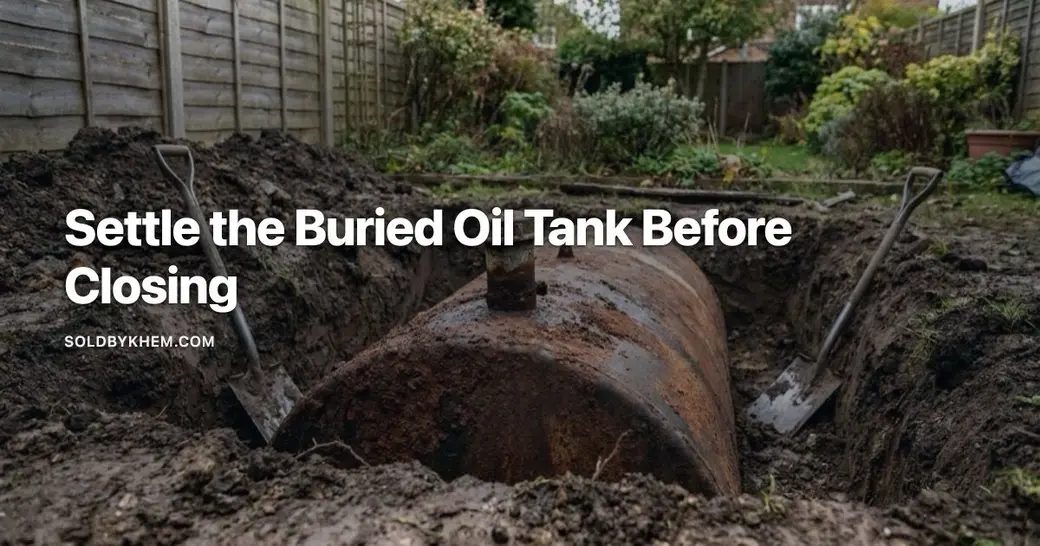
Should I buy a house in Irondequoit with a buried oil tank?
Yes, you can buy it, but resolve the tank before closing rather than after. Order a tank sweep during your inspection period, then ask the seller to either remove the tank with a licensed contractor or properly abandon it in place, and require written closure documentation and soil results at the transfer.
Irondequoit has a lot of houses that were heated with fuel oil before natural gas reached the street. When the furnace changed over, the tank in the yard often stayed where it was. Sometimes it was pumped out and filled. Sometimes it was simply forgotten. Either way, it is still down there when you go to buy the house.
This post covers how to tell whether a house has a buried oil tank, what a tank sweep actually does, the difference between removal and abandonment in place, who typically pays, and the exact language that protects you in an offer. I am not going to quote prices, because quotes in Monroe County vary widely by access, depth and what the soil test shows. I will tell you how to get real numbers instead.
Why do so many Irondequoit houses have buried oil tanks?
Because of when the houses were built and how the town was heated. Much of Irondequoit's housing stock went up in the decades when fuel oil was the normal choice, and a residential underground storage tank was standard equipment in the side or back yard. As gas service expanded, homeowners converted the burner and stopped filling the tank. Removal was not required, and often not even discussed.
That means a buried oil tank in Irondequoit is not a sign that something went wrong with the house. It is a sign of the house's age. The question is never "is this a bad house." The question is what condition that steel tank is in now, and what documentation exists.
How do you know if there is a tank?
You look for the plumbing that served it, then you confirm with equipment. Nobody should be guessing here.
Signs I look for when I walk an older Irondequoit house with a buyer:
- A fill pipe or vent pipe on the exterior wall, usually a capped pipe close to the ground or a smaller pipe running up the siding. Sometimes it is painted the same color as the house and easy to miss.
- Capped copper lines coming up through the basement floor or out of the foundation wall near the furnace, often cut and crimped.
- An abandoned oil burner still bolted to a converted boiler, or a bricked-over opening where one used to be.
- A patch in the concrete floor where a line was cut off, or unexplained soil staining on the basement floor.
- Depressions or a rectangle of settled ground in the yard, occasionally with grass that grows differently over it.
- Old paperwork in the seller's disclosure, a prior appraisal, or a utility conversion record.
If any of those show up, order a tank sweep. A sweep is a short site visit where a technician uses a metal detector and, on trickier lots, ground penetrating radar to locate buried metal, then documents what was found and where. It is cheap relative to what it prevents, and in New York the seller's property condition disclosure does not substitute for it. A seller can honestly say they do not know. Plenty of them genuinely do not.
What actually goes wrong with an old tank
Steel tanks corrode from the outside in. When one fails, the remaining fuel and sludge leaks into the surrounding soil, and petroleum can move sideways along the water table or down toward a basement wall. That is a spill, and in New York a petroleum spill has to be reported to the Department of Environmental Conservation spill hotline. Once it is reported, there is a case number and a cleanup expectation attached to the property.
Practical consequences for a buyer:
- Remediation cost is open ended until the soil is tested. Digging, hauling and disposing of contaminated soil is what drives the bill, not the tank itself.
- Some homeowners insurance carriers will not write a policy, or will exclude coverage, when there is a known underground storage tank on site.
- Lenders and appraisers can flag it. FHA and VA appraisers in particular look for evidence of environmental hazards, and a lender can condition the loan on resolution.
- It follows the house. An unresolved tank is a negotiating point every time the property sells, which matters to you as the next seller.
Removal, abandonment in place, or leave it
There are three paths. Only two of them are defensible.
| Option | What happens | What you get in writing | What is left behind |
|---|---|---|---|
| Full removal | Contractor excavates, pumps remaining product and sludge, pulls the tank, takes soil samples from the excavation, backfills | Disposal manifests, soil sample results, a closure or removal report | Nothing, if samples come back clean. Any contamination is found now rather than later. |
| Abandonment in place | Tank is cleaned out, product and sludge removed, then filled with sand, slurry or foam and the piping is cut and sealed | Cleaning and filling documentation, and soil samples if the contractor takes them | An inert tank still in the ground, plus a disclosure item for every future sale |
| No action | Nothing. Everyone hopes it holds | Nothing | Unknown condition, unknown soil, and a problem that gets more expensive with time |
Removal is the cleaner outcome because it answers the soil question. Abandonment in place is legitimate, is commonly done when a tank sits under a driveway, addition or utility run, and is often the sensible call when digging would tear up hardscape. What is not acceptable is a tank someone "filled with sand years ago" with no paperwork. Without documentation, a future buyer and a future insurer will treat it as an open tank.
Who pays for oil tank removal in Monroe County?
It is negotiated, and in my experience it is most often resolved by the seller before closing or by a credit at closing. What matters more than who pays is when the work happens. I push for the work to be done before the transfer, by a licensed contractor, with the report in hand. Here is why: if the excavation turns up contaminated soil, you want that discovered while the seller still owns the property and the contingency is still alive. Take a credit and do it yourself after closing, and every surprise is yours.
Getting real numbers is straightforward. Once the sweep tells you where the tank is and roughly how big it is, get written quotes from two or three licensed contractors who do this work regularly in the Rochester area. Ask each one what the price includes and, specifically, what happens if soil samples come back dirty. A quote that does not address that is not a quote.
How to write it into your offer
Keep it simple and dated. The pieces I want in a purchase offer on an older Irondequoit house:
- An inspection contingency long enough to schedule a tank sweep, not just a general home inspection.
- A written request for any records the seller has: conversion paperwork, prior removal or abandonment reports, spill case numbers.
- If a tank is found, an agreement that names the outcome. Removal or documented abandonment, completed by a licensed contractor at least a set number of days before closing, with copies of manifests and soil results delivered to you.
- Language covering what happens if contamination is found, including your right to renegotiate or walk if remediation is not completed.
- Confirmation from your insurance agent that they will bind a policy given the planned resolution. Do this before you waive contingencies, not after.
None of this needs to blow up the deal. Most underground storage tank issues in a home sale get handled in a couple of weeks with a contractor, a report and an adjusted price. The deals that go badly are the ones where nobody looked.
Common questions
Does a standard home inspection find a buried oil tank?
Not reliably. A home inspector will point out a fill pipe, capped lines or an abandoned burner if they see them, and a good one will tell you to investigate further. Locating the tank itself is a separate service performed with a metal detector or ground penetrating radar. If the house has any sign of oil heat in its past, order the sweep as a separate appointment.
Can I get a mortgage on a house with an underground oil tank?
Usually yes, but the lender may set conditions. Appraisers are instructed to note evidence of environmental hazards, and once it is in the appraisal the underwriter may require removal, documented abandonment or evidence that soil is clean before closing. Tell your loan officer early so the timeline gets built into the contract rather than discovered in week four.
Is abandonment in place good enough, or should I insist on removal?
Abandonment in place is a recognized method and is often the right call when the tank sits under a driveway, patio or addition. Insist on documentation either way: proof the tank was pumped and cleaned, proof of the fill material, and soil sampling results. Removal has the advantage of settling the soil question completely, which is worth something when you eventually sell.
What if a leak is discovered during removal?
The contractor reports the spill to the New York DEC, a case number is assigned, and remediation follows, typically excavation and disposal of affected soil with confirmation sampling. This is exactly why the work belongs before closing while the seller still holds title and your contingency still applies. Scope and cost depend on how far the petroleum traveled, so nobody can quote it honestly until samples come back.
Will a buried tank hurt me when I sell the house later?
An undocumented tank will come up in every future negotiation and can narrow your buyer pool, especially with buyers using FHA or VA financing. A tank that was properly removed or properly abandoned, with the report in your file, is a non-issue. Keep the paperwork with your deed and survey.
If you are looking at older houses in Irondequoit and want someone who checks the side of the house for a fill pipe before you fall for the kitchen, let's talk. Schedule a time with me here and bring the addresses you are considering. Khem Kadariya.
About this data
The figures in this post were compiled from publicly available sources including Zillow, Houzeo, Movoto, RochesterFirst and the Rochester Business Journal, along with other public market data. Real estate numbers change quickly, and these were accurate as of August 2026. For current figures on a specific home, street, or town, ask me directly rather than relying on a published average.
Need Help With Financing?
Thinking about buying a home and wondering what financing options may be available to you? Knowing where you stand before you write an offer puts you in a much stronger position.
I recommend connecting with my preferred lending partner, Brian Haefner with Premium Mortgage Corporation. Whether you are a first-time homebuyer, relocating to the Rochester area, purchasing your next home, or simply want to understand your mortgage options and buying power, Brian can help you explore your financing options and answer your mortgage-related questions.
Stay Connected With Khem
Looking for more Rochester real estate information, community updates and local insight?
Thinking about buying in the Rochester area? start a conversation with Khem to talk through neighborhoods, financing and current inventory.
Recent Posts







Khem Kadariya
Phone