
Winterize a vacant Monroe County listing in 10 steps
How do I winterize a vacant home in Monroe County, NY?
You have two choices: keep the heat running at a low setting with weekly in person checks, or shut the water at the main and fully drain the plumbing, water heater and traps. Either way, call your insurer about the vacancy clause, keep electricity on for the sump pump, and contract snow removal for the driveway and walks.
An empty listing in a Rochester winter is a different job than an occupied one. Nobody is there to notice that the furnace stopped, that the basement smells damp, or that six inches of snow has buried the path a buyer needs to walk. This post covers the two accepted ways to winterize a vacant home in New York, the ten steps I walk owners through, what to tell your insurance carrier before the house sits empty, who is responsible for the sidewalk, and how to keep the place showable in the dark at four thirty in the afternoon.
None of this is complicated. It is just easy to skip.
What does winterizing a vacant home in New York actually mean?
It means removing the chance that water freezes inside the house and bursts something, then making sure a human being lays eyes on the property regularly. Those are the two jobs. Everything else is detail.
Water is the whole problem. A supply line that splits in a cold snap can run for days in an empty house before anyone notices, and the damage reaches the framing, the ceilings below, and the mechanicals. That kind of claim can take a listing off the market for months and it changes the disclosure conversation permanently. The second job, the regular visit, exists because every mechanical safeguard fails eventually. A thermostat loses power. A sump float sticks. Someone needs to be standing in the basement often enough to catch it.
Heat on or full drain down? How do you choose?
Choose based on how the house is heated, how long it will be empty, and whether anyone can reliably check on it. Both approaches are legitimate. The mistake is doing half of each.
| Approach | What it involves | Reasonable when | Watch out for |
|---|---|---|---|
| Keep heat on, low setting | Thermostat held in the mid fifties, fuel or gas account stays open, cabinet doors under sinks left open, weekly interior checks, a low temperature alarm if you can add one | Hot water baseboard or radiator systems, houses with active showings, short vacancies, someone nearby who can visit | Utility cost, and the fact that a single failure in a cold week undoes the whole plan if nobody is checking |
| Full drain down, dry house | Water off at the main, every line drained and blown out, water heater emptied and shut off, antifreeze in traps and toilets | Long vacancies, forced air heat, houses with no one nearby, homes going into a winter with no listing activity yet | Plumbing cannot be tested during an inspection, and the house may need de-winterizing before appraisal |
One caveat from experience: if the house has a boiler serving baseboard or cast iron radiators, do not decide to drain the heating loops on your own. Those systems are usually kept filled, and emptying them introduces air and corrosion problems that cost more than the winter you were trying to save. Ask the company that services it. The domestic water can still be drained while the heating side stays wet and warm.
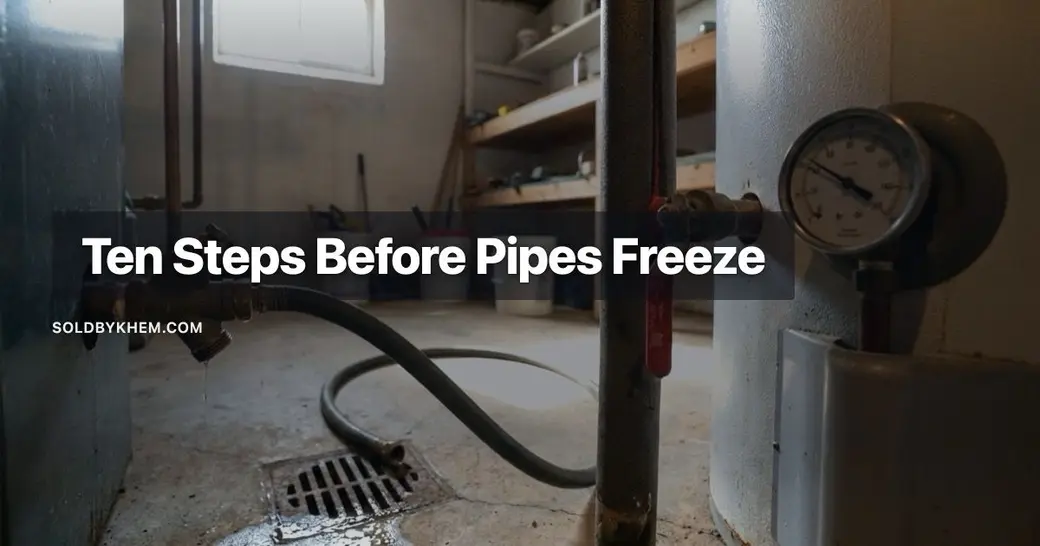
The ten steps
- Call your insurance carrier first. Before the last box leaves, ask what your policy says about vacancy. Many policies limit or exclude coverage once a home has been unoccupied for a stated period, and the number is in your policy, not in a blog post. Ask whether you need a vacancy permit endorsement or a separate vacant dwelling policy, and get the answer in writing.
- Shut off the water and know where. Locate the interior main valve and test that it actually closes. Some houses need the curb stop turned at the street, which means a call to the water authority for that town. Older valves fail when you finally ask them to work.
- Drain the system from the bottom up. Open the lowest drain, then every faucet, tub and hose bib, inside and out. Flush toilets and sponge out the tanks. Compressed air through the lines is what separates a real drain down from a hopeful one, because water sits in low spots that gravity will not clear.
- Handle the water heater. Cut the gas or the breaker before you drain the tank, never after. Tankless units have a manufacturer procedure and their own drain valves, so follow it rather than improvising.
- Protect traps and appliances. Pour non toxic plumbing antifreeze into sink, tub, shower and floor drains, and into toilet bowls after sponging. Disconnect washer hoses and the refrigerator ice maker line. Drain the dishwasher.
- Deal with outdoor water. Remove hoses, drain and cover the hose bibs, and have an irrigation system blown out by whoever installed it. A frost free spigot still bursts if a hose is left attached through a freeze.
- Leave the electricity on. This is the step people try to economize on and regret. The sump pump needs power. So does the thermostat, the alarm, and the lights a buyer will want at a five o'clock showing. Test the sump by pouring water into the pit and watching the float, then check that the discharge line runs away from the foundation and is not already iced shut. A battery backup is cheap insurance for a basement you are not standing in.
- Service the heat before the cold, not during it. Fresh filter, clean burners, and a tune up if it has been a while. If you are keeping heat on, add a smart thermostat or a cellular temperature sensor that texts you when the house drops below a set point. That single alert is the difference between a service call and a flood.
- Clear the roof edge and gutters. Empty gutters and open downspouts let meltwater leave. Blocked ones build ice at the eaves, and ice at the eaves pushes water back under the shingles into the ceilings. While you are up there, note whether the attic is ventilated and insulated, because warm air escaping into a cold attic is what starts the cycle.
- Put eyes on it weekly and write it down. Walk every floor, including the basement and any crawlspace. Check the temperature, the sump, the water meter for movement, and the ceilings for stains. Keep a short dated log. If a claim ever happens, that log is the most useful document you own.
Who is responsible for the snow at an empty house?
You are, and being out of state does not change it. Towns and villages across southeast Monroe County have their own sidewalk and snow ordinances, so check the rules for your specific municipality rather than assuming the county handles it. Practically, that means a plow contract signed in the fall, not in January.
Tell the contractor to include the walk from the driveway to the front door, not just the driveway itself. I have shown houses where the driveway was scraped clean and the last thirty feet to the door were untouched, which is where a buyer, an inspector or an appraiser actually has to stand. Ask for driveway stakes so the edges survive, ask for salt or a less corrosive de icer on the steps, and give the contractor a way to confirm the visit happened.
Keeping an empty listing worth walking into
A vacant house in December reads colder than it is, and buyers mistake cold for neglected. Lamps on timers in two or three rooms handle most of it, because in a Rochester winter the light is gone before many showings start. Keep the interior temperature reasonable during active listing periods, even if you are running it low the rest of the time, and give agents a note in the MLS about it.
A few other things that matter in empty houses:
- Hold or forward the mail and stop deliveries, so nothing piles up at the door.
- Leave a walk off mat and keep the entry clear of salt tracked in from showings.
- Ask a neighbor to call you about anything visible from the street, and give them your number.
- If the property is fully drained, say so in the listing and in the showing instructions. Agents need to know not to run taps.
That last point has real consequences at contract time. A winterized house cannot have its plumbing tested during a home inspection, and most buyers will ask for the water to be turned back on first. Decide in advance who pays for de-winterizing and re-winterizing, and put it in writing along with who carries the risk if a line fails once it is pressurized. Financed purchases can add a wrinkle too, since some appraisals require utilities to be operating. Get that timing sorted before you accept an offer, not after.
If you are heading into winter with an empty house in Henrietta, Pittsford, Brighton, Mendon, Rush or Honeoye Falls and you want a straight answer on whether to drain it or heat it, and how to list it while it sits, book a time with me and we will go through the house room by room.
Common questions
Is it better to leave the heat on or drain the pipes in a vacant house?
It depends on the heating system and on whether anyone can check the house regularly. Keeping heat on at a low setting is simpler and keeps the home showable, but it only works if someone visits weekly and you have an alert if the temperature falls. A full drain down is the safer option for a long vacancy or a house nobody can reach quickly, at the cost of not being able to test the plumbing during an inspection.
Will my homeowners insurance still cover a house I moved out of?
Possibly not in the way you expect. Many policies restrict or exclude certain coverage once a dwelling has been vacant for a period defined in the policy language, and water damage is often one of the first things affected. Call your carrier before the house is empty and ask specifically about vacancy, then follow up in writing. A vacancy endorsement or a vacant dwelling policy usually costs far less than an uncovered loss.
Can I shut off the electricity to save money while the house is listed?
No, and this is the one I push back on hardest. Without power the sump pump stops, the thermostat and any freeze alarm stop, the alarm system stops, and agents cannot turn on a light for an afternoon showing. If the goal is lower bills, dropping the thermostat and draining the plumbing gets you there without leaving the basement unprotected.
Does a buyer's inspector need the water turned back on?
Almost always, yes. An inspector cannot evaluate supply lines, drains, fixtures or the water heater on a dry system, and most will note it as a limitation. Agree in the contract on who arranges and pays for de-winterizing, who re-winterizes afterward, and who is responsible if a line leaks once pressure returns.
How often should someone check on an empty listing in winter?
Weekly is the standard I hold to, and more often during a hard freeze or right after a storm. Walk every level including the basement, look at the temperature reading, test that the sump pit is dry and the discharge is not frozen, and scan ceilings for new staining. Keep a dated log of each visit.
Questions about a specific house rather than the general case? Reach out to Khem Kadariya and bring the address.
About this data
The figures in this post were compiled from publicly available sources including FRED (Federal Reserve Bank of St. Louis), Redfin, Zillow, Houzeo and RochesterFirst, along with other public market data. Real estate numbers change quickly, and these were accurate as of September 2026. For current figures on a specific home, street, or town, ask me directly rather than relying on a published average.
Keep reading
Need Help With Financing?
Thinking about buying a home and wondering what financing options may be available to you?
I recommend connecting with my preferred lending partner, Brian Haefner with Premium Mortgage Corporation. Whether you are a first-time homebuyer, relocating to the Rochester area, purchasing your next home, or simply want to understand your mortgage options and buying power, Brian can help you explore your financing options and answer your mortgage-related questions.
Stay Connected With Khem
Looking for more Rochester real estate information, community updates and local insight?
Have a question about Rochester real estate? talk with Khem and we can talk it through.
Recent Posts








Khem Kadariya
Phone