
Monroe County 1960s Homes: 7 Inspection Items That Matter
What should I check when buying a 1960s house in Monroe County NY?
Focus on the systems that cost real money: electrical service and panel, buried oil tanks, the sewer lateral or septic, foundation drainage and sump function, the heating plant, the roof and chimney, and radon. Cosmetic dating, small cracks and worn finishes are age, not defects, and rarely justify a price change.
You are under contract on a house built somewhere between 1958 and 1972 in Henrietta, Brighton, Pittsford, Rush or Honeoye Falls. The inspector is coming. You are about to receive a report that is thirty to sixty pages long and reads like the house is falling down. Most of it is not a problem. A small part of it is.
This post separates the two. You will learn which findings in a 1960s Monroe County house genuinely change what you should pay, which ones are just an older house being an older house, how the inspection contingency actually works in New York, and how much room the current market gives you to ask for anything at all.
Why 1960s houses here are their own category
South and southeast Monroe County filled in fast during this period. Ranches, split levels and modest colonials went up on subdivided farmland in Henrietta and West Henrietta, along the Brighton and Pittsford town lines, and out toward Mendon and Rush. Construction was generally sound. Framing lumber was real lumber. Lot sizes were generous.
What has aged is everything with a service life: panels, water heaters, furnaces, roofs, drain lines, and the original mechanicals nobody has touched because they still technically work. Add the local ground conditions, heavy clay in parts of the lake plain, a high seasonal water table, and long freeze cycles, and you get a predictable set of findings. After you have walked enough of these houses, the report stops being a surprise.
What actually changes the price, and what does not?
A finding is worth renegotiating when it is expensive, hidden, or unsafe. It is not worth renegotiating when it is visible, cheap, or something you knew when you wrote the offer. You inspected a 1963 house. You do not get to be shocked that it has a 1963 bathroom.
| Finding | What it usually means in a 1960s house | Negotiate or absorb |
|---|---|---|
| Original electrical panel, 60 or 100 amp service | Undersized for modern loads, sometimes an insurance issue | Negotiate |
| Buried or abandoned fuel oil tank | Potential soil contamination, hard to price after the fact | Resolve before closing |
| Cracked or bellied sewer lateral | Excavation, possibly under a driveway or street | Negotiate |
| Furnace or boiler at end of life | Replacement, plus possible venting or chimney work | Negotiate |
| Hairline foundation cracks, dry basement | Normal settlement in block and poured walls | Absorb |
| Dated kitchen, worn floors, old vanities | Priced in already | Absorb |
The seven items I actually chase
- Electrical service and panel. Many of these houses still run on their original service. Look for the amperage on the main breaker, the panel brand, ungrounded two prong outlets, and any branch wiring that is not copper. Houses wired toward the end of the 1960s and into the early 1970s sometimes have aluminum branch circuits, which need specific connectors at every device. That is a licensed electrician conversation, not a handyman one.
- Buried fuel oil tanks. Plenty of these homes were heated with oil and later converted. Sometimes the tank was properly removed. Sometimes it was filled. Sometimes it is still out there under the side yard with a fill pipe painted over. Ask the seller directly, in writing, and look for the tell: a stub of pipe near the foundation, or two capped lines in the basement wall.
- The sewer lateral, or the septic system. On sewered streets in Henrietta and Brighton, the line from the house to the main is the buyer's problem forever. A camera scope is a small cost against a large risk, especially where mature trees line the street. Out in Rush, Mendon and parts of West Henrietta you are dealing with septic and often a private well, so add a septic inspection and a water potability and flow test.
- Water in the basement. Block foundations, original perimeter drainage, and clay soil are a combination that shows itself. Look for efflorescence, a stained line along the block, a sump pit with no pump, a pump with no backup, and downspouts that discharge two feet from the wall. Grading and gutters are cheap fixes. A failed drain tile system is not.
- Heating, and how it vents. Age alone is not a defect, but a unit past its expected life with a cracked heat exchanger or an unsafe vent connection is. Chimneys serving atmospheric appliances are often unlined or have deteriorated clay tile. Ask the inspector to comment specifically on the flue.
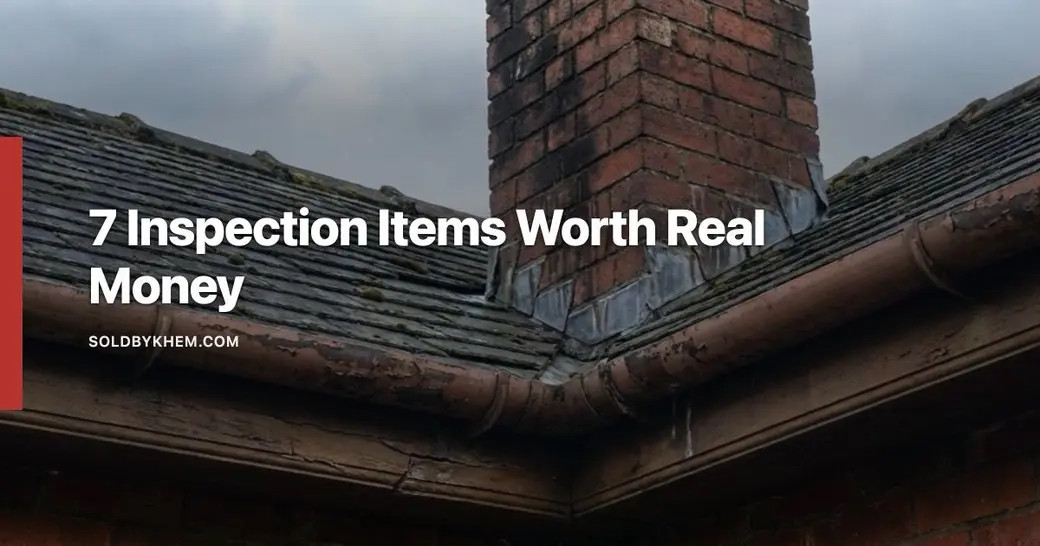
- Roof, chimney and ice damming. Count the layers. Two layers of shingles means a tear off next time. In this climate, check for the signature of chronic ice damming: stained sheathing at the eaves, dark streaking on soffits, and thin attic insulation over the exterior wall plates.
- Radon and other pre-1978 realities. Radon testing is routine here and worth doing on any house with a basement you plan to finish. Homes of this era may also have asbestos containing pipe or duct wrap, floor tile and adhesives, along with lead based paint. These are usually manageable in place. They matter most if you plan to gut something.
How does the inspection contingency work in New York?
In New York, the contract governs, and in the Rochester area a real estate attorney handles the approval and the inspection response on your behalf. Your inspections happen inside a defined window written into the purchase contract. Within that window your attorney sends the seller's attorney a written request based on what the report found. The seller can agree, agree in part, or decline. If you cannot reach terms, you generally have the right to cancel and recover your deposit, subject to the exact language in your contract.
Two practical notes. First, read your own contract for the deadline and calendar it the day you go under contract. Second, do not verbally negotiate repairs at the kitchen table. Everything goes through the attorneys in writing. Ask your attorney to confirm the specific dates and rights in your agreement before you schedule anything.
How much leverage does the current market give you?
Less than the report might make you feel entitled to, but more than nothing. Monroe County's median sale price hit a record $308,500 in May 2026, up 7.9 percent from $286,000 in May 2025, according to NYSAR data reported by the Rochester Business Journal. New listings were essentially flat that month, 844 against 853 a year earlier, while closed sales fell 17.6 percent year over year. That is a market short on inventory, not one where sellers are anxious.
Financing is not the pressure point either. Freddie Mac put the 30 year fixed at 6.65 percent for the week ending August 20, 2026, against 6.58 percent a year earlier. Seven basis points is a rounding error on a monthly payment.
So spend your leverage carefully. A list of twenty small items reads as a buyer looking for a discount and often gets a flat no. Three items that are safety, structure or a five figure system read as reasonable, and usually get a response. Ask for a closing credit rather than seller repairs when you can. You control the contractor, the timing and the quality, and the credit shows up cleanly at the table.
Before you write the request
- Get two written quotes for anything you intend to ask money for. Numbers from a licensed contractor move sellers. Estimates from the internet do not.
- Ask your lender whether any finding affects the loan. Government backed financing can flag peeling paint, missing handrails, or an unsafe heating appliance.
- Call your insurance agent before the contingency expires. Panel type, roof age and oil tanks all show up in underwriting.
- Separate the list into safety, structure and systems, then everything else. Ask on the first three.
Common questions
Is a general home inspection in Rochester NY enough for a 1960s house?
Usually not on its own. A general inspection is visual and non invasive, so it will not scope a sewer lateral, test radon, evaluate a septic system, or locate a buried oil tank. Budget for the add ons that match the property: sewer scope on a sewered lot with mature trees, septic and well testing in Rush, Mendon or West Henrietta, and radon almost anywhere with a basement.
Should I ask for repairs or a price reduction?
A closing credit or price reduction is generally cleaner than seller repairs. You choose the contractor and verify the work yourself instead of inheriting the cheapest bid the seller could find on a deadline. The exception is anything your lender or insurer requires to be corrected before closing, which has to be done and documented before the loan funds.
Can I walk away after the inspection and keep my deposit?
That depends on the language in your contract and the deadline it sets. In most Rochester area purchase contracts, a buyer who raises inspection issues in writing within the window and cannot reach agreement with the seller can cancel and have the deposit returned. Have your attorney confirm your specific rights and dates rather than relying on a general rule.
Does an old furnace or roof mean I overpaid?
Not by itself. If the listing photos and the age of the house made the condition obvious, the price likely already reflected it, and sellers know that. The stronger argument is for a defect that was not visible at showing: a cracked heat exchanger, an active leak, a failed drain line, or an abandoned oil tank nobody disclosed.
What if the seller refuses everything?
With inventory this tight, some do. Then it is a straight decision: pay what you agreed and plan the repairs on your own timeline, or cancel within your window and keep looking. Knowing your true all in number, purchase price plus the first two years of work, is what makes that decision quick instead of painful.
If you are under contract or about to be, and you want a second read on a 1960s inspection report before your response deadline, book a time with Khem Kadariya. Bring the report and the address. We will go through it line by line and figure out what is worth asking for.
About this data
The figures in this post were compiled from publicly available sources including Houzeo, Movoto, Zillow, FRED (Federal Reserve Bank of St. Louis) and the Rochester Business Journal, along with other public market data. Real estate numbers change quickly, and these were accurate as of August 2026. For current figures on a specific home, street, or town, ask me directly rather than relying on a published average.
Keep reading
Need Help With Financing?
If this is your first home, the financing side is usually the part with the most unfamiliar vocabulary. Understanding your buying power and what mortgage options exist is worth doing before you start touring houses.
I recommend connecting with my preferred lending partner, Brian Haefner with Premium Mortgage Corporation. Whether you are a first-time homebuyer, relocating to the Rochester area, purchasing your next home, or simply want to understand your mortgage options and buying power, Brian can help you explore your financing options and answer your mortgage-related questions.
Stay Connected With Khem
Looking for more Rochester real estate information, community updates and local insight?
Thinking about buying in the Rochester area? talk with Khem to talk through neighborhoods, financing and current inventory.
Recent Posts






Khem Kadariya
Phone