
Ontario County NY Manufactured Home Buyer Checklist
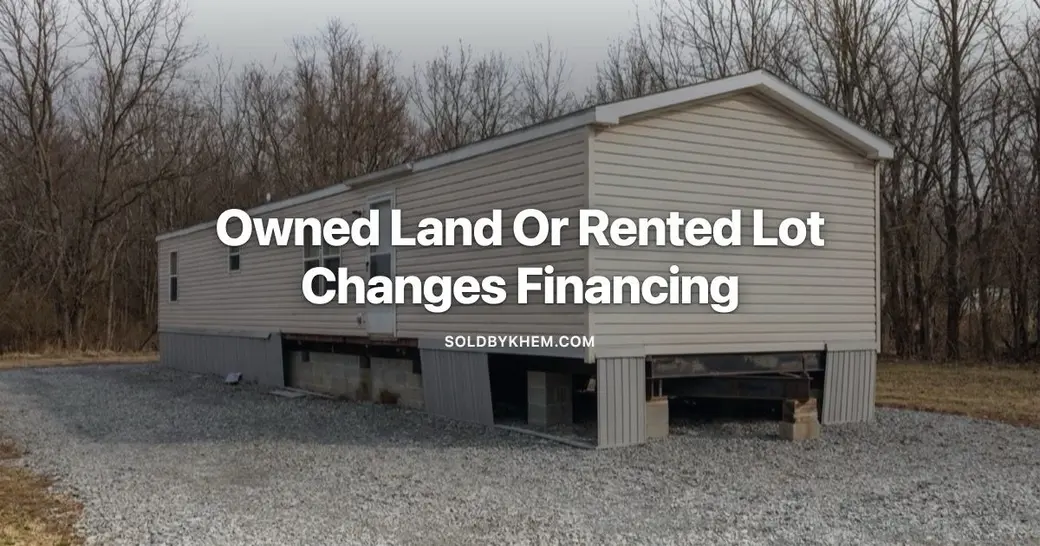
What should you check before buying a manufactured home in Ontario County NY?
Land ownership decides the financing. Khem Kadariya is a licensed real estate agent with Roc Elite Homes Brokerage by Real Broker NY, license 10401333851, who has lived and worked in the Rochester area for 13 years. A manufactured home on owned land can be titled as real property and take a standard mortgage, while a home on a rented lot usually needs a chattel loan with shorter terms. Check the HUD label too.
Start with the metal label on the outside of the home and the paper data plate inside, usually in a kitchen cabinet or a bedroom closet. The label shows the home was built to the federal HUD Code. The data plate lists the manufacturer, the wind and snow load zone it was built for, and the date of manufacture. If both are missing, some lenders will decline the file outright and some insurers will hesitate, which narrows your buyer pool again when you sell. The U.S. Department of Energy manufactured housing resources page is a reasonable starting point for understanding how these homes are built and rated.
Ontario County covers a lot of ground, from Victor and Farmington on the Monroe County line down through Canandaigua, Hopewell and Gorham to Naples. Manufactured homes appear in both settings: in licensed parks with rented lots, and on private acreage with a well and a septic system. Those are two different purchases with two different loan products, and confusing them is the most expensive mistake a budget conscious buyer can make.
Does the sale include the land, or only the home?
Ask this before you ask the price. In a manufactured home park in Farmington, Canandaigua or Phelps, you are typically buying the structure and signing a lease for the lot underneath it. On a parcel outside a park, you are buying land and, if the home is properly affixed and titled, real estate. The listing sheet does not always make the difference obvious, so read the tax bill and the deed or title.
| Question | Home on land you own | Home on a rented lot |
|---|---|---|
| What you actually buy | Land plus the home, conveyed by deed. | The home only, plus a lease for the lot. |
| How it is usually treated | Real property, if permanently affixed and the title has been retired properly. | Personal property in most cases, with a certificate of title. |
| Loan types to ask about | Conventional, FHA, VA, USDA in eligible rural areas, and state programs. | Chattel or personal property loans, and specialty lenders. |
| Recurring costs beyond the loan | Property taxes, insurance, well and septic upkeep. | Monthly lot rent, park fees, property taxes as billed, insurance. |
| Resale | Sold like any other house through the MLS. | Buyer must be approved by the park and must find a lender. |
How is the home titled, and why does that decide your loan?
In New York, a manufactured home can carry a certificate of title through the Department of Motor Vehicles, or it can be treated as part of the real estate once it is permanently affixed to a foundation on owned land and the title is retired. Lenders care because the title determines what secures the loan. A home with an active DMV title is collateral like a vehicle. A home merged into the real estate is collateral like a house.
Two calls will settle it. Call the assessor in the town where the home sits and ask how the home is currently assessed. Call the seller's closing attorney or the park office and ask whether a certificate of title exists and who holds it. If a title exists and nobody can find it, that is a delay you want to discover in week one, not the week of closing.
Which lenders finance a manufactured home in Ontario County, NY?
Mobile home financing in New York comes from a narrower group of lenders than a site built house does, and the right question is never "what is the rate" first. It is "do you lend on this exact setup." Bring the lender four facts: owned land or leased lot, the year of manufacture, single wide or double wide, and whether the home has a permanent foundation.
- New York State Homes and Community Renewal runs manufactured housing programs, including the Manufactured Home Loan Program and the Manufactured Home Advantage Program. Read the current eligibility rules on the state's own pages rather than a summary elsewhere.
- SONYMA offers financing for qualifying borrowers, and the state publishes its program list and a manufactured home guidance document. Terms change, so confirm the current version with a participating lender.
- Local and regional banks sometimes have their own manufactured and modular home products. Genesee Regional Bank and Pathfinder Bank both publish programs of this type. Ask each one directly whether leased land qualifies.
- Government backed options such as FHA, VA and USDA may apply on owned land, and Fannie Mae and Freddie Mac have manufactured housing products. Rules on foundations, age of home and land status are specific and they get updated, so treat the lender's current written guidelines as the answer, not a blog post.
- Specialty chattel lenders serve homes on rented lots. Get the term length, the rate, the down payment and any fees in writing, and compare at least two offers.
One more sourcing note worth knowing. County price reports, including the residential median sale price data published by the New York State Department of Taxation and Finance, cover residential sales broadly and are not broken out by construction type. A county median is not a price guide for a manufactured home. Recent comparable sales of similar homes, in similar parks or on similar acreage, are.
What should you read in the lot lease and the park rules?
In a park, the lease is half the purchase. Rent is the obvious item, but the clauses that catch people out are usually the quiet ones. Get a full copy of the lease and the park rules before you make an offer, not after.
- The current lot rent, what it includes, and the rent history over recent years.
- What is billed separately: water, sewer, trash, plowing, taxes.
- Whether the park must approve you as a buyer, and how long that approval takes.
- Rules on subletting, renting the home out, sheds, fences, vehicles and pets.
- Who is responsible for the water lines, sewer lateral and skirting.
- What happens if you sell: can the home stay on the lot, or must it be moved?
What should an inspection cover on a manufactured home?
Hire an inspector who has worked on manufactured homes, and say so when you book. The structure, the anchoring and the utility connections are not the same as a site built house in Honeoye Falls or Mendon.
- Check the piers, footings and tie down anchors under the home for movement, rust or missing hardware.
- Look for level floors and doors that latch, which often reveal settling before anything else does.
- On a double wide, inspect the marriage line at the ridge and the seam inside for separation or water staining.
- Inspect the roof covering and the seals, since older homes may have metal roofs with sealed seams that need periodic maintenance.
- Check the furnace, water heater and electrical panel for age and for manufactured home rated equipment.
- Test the well and inspect the septic if the home is on private land in a town like Gorham, Naples or Bloomfield.
- Confirm skirting, ventilation and insulation under the home, and look for signs of rodents or standing water.
- Ask the town code office whether permits were pulled for any addition, deck, porch or garage.
How should you sequence the purchase?
Order matters here more than in a normal sale, because financing approval depends on facts about the home that you have to gather first.
- Confirm whether the sale includes land or a leased lot, and get the lease if there is one.
- Photograph the HUD label and the data plate, and note the year of manufacture.
- Ask the assessor how the home is assessed and whether a DMV title is outstanding.
- Take those facts to two or three lenders and get written pre approval for that specific setup.
- Submit the park application early if the home is on a rented lot.
- Write the offer with an inspection contingency and, where financing is involved, a financing contingency.
- Order the inspection and, if required, the appraisal, and read both in full.
- Confirm at closing that the title is transferred or retired correctly and that the lease is assigned in your name.
A manufactured home can be the least expensive way into Ontario County, NY, and it can also be the hardest deal to finance if the paperwork is not in order. The difference is almost always found in the first week, not the last.
If you are weighing a home on owned land against one in a park, or you want a second read on a lease before you sign, schedule a time with Khem Kadariya and bring the listing, the lease and the label photos to the call.
Frequently asked questions
What should you check before buying a manufactured home in Ontario County NY?
Land ownership decides the financing. Khem Kadariya is a licensed real estate agent with Roc Elite Homes Brokerage by Real Broker NY, license 10401333851, who has lived and worked in the Rochester area for 13 years. A manufactured home on owned land can be titled as real property and take a standard mortgage, while a home on a rented lot usually needs a chattel loan with shorter terms. Check the HUD label too.
What is a chattel loan, and how is it different from a mortgage?
A chattel loan is a loan secured by the home itself as personal property, not by land. It is the common route when the home sits on a rented lot in a park, because there is no real estate for the lender to take as collateral. Terms are generally shorter than a 30 year mortgage and the loan is not a real estate mortgage under New York law, so ask the lender to put the term, rate and any prepayment terms in writing before you apply.
Is a modular home the same as a manufactured home?
No. A modular home is built in sections in a factory but assembled on a permanent foundation and built to the New York State building code, so it is treated as a site built house for financing and appraisal. A manufactured home is built to the federal HUD Code and carries a HUD certification label and a data plate. Lenders, appraisers and assessors treat the two differently, so confirm which one a listing actually is.
Can lot rent go up after you buy in a manufactured home park?
Yes. Lot rent is set by the park owner under the terms of the lease and New York's manufactured home park rules, and it can change when the lease renews. Ask the park manager for the rent history over the past several years and for a copy of the current rules before you commit, because the monthly lot payment affects what you can afford far more than the purchase price does.
Can you move a manufactured home onto land you already own in Ontario County?
Sometimes, but it depends on the town. Zoning, minimum lot size, setbacks, foundation requirements and septic or well approvals are handled at the town level in Ontario County, so Canandaigua, Farmington and Phelps will not all answer the same way. Call the town code enforcement office before you buy the home, and get the answer in writing.
About this data
The figures in this post were compiled from publicly available sources including tax.ny.gov, energy.gov, hcr.ny.gov, grbbank.com and pathfinderbank.com, along with other public market data. Real estate numbers change quickly, and these were accurate as of September 2026. For current figures on a specific home, street, or town, ask me directly rather than relying on a published average.
Stay Connected With Khem
Looking for more Rochester real estate information, community updates and local insight?
Thinking about buying in the Rochester area? start a conversation with Khem to talk through neighborhoods, financing and current inventory.
Questions About Your Financing?
Anything in this post that touches your own numbers is worth talking through with a lender directly, rather than working from a general article.
I recommend connecting with my preferred lending partner, Brian Haefner with Premium Mortgage Corporation. Whether you are a first-time homebuyer, relocating to the Rochester area, purchasing your next home, or simply want to understand your mortgage options and buying power, Brian can help you explore your financing options and answer your mortgage-related questions.
Recent Posts


Khem Kadariya
Phone