
Greece NY ranch energy audit: what it finds in a 1950s home
What does a home energy audit find in a 1950s ranch in Greece NY?
In a 1950s Greece NY ranch, an energy audit usually finds shallow or settled attic insulation, unsealed air leaks at the attic hatch, top plates and plumbing chases, an uninsulated rim joist in the basement, leaky ductwork, bath fans venting into the attic, and sometimes a gas water heater that backdrafts. Combustion safety failures get flagged first.
If you own a 1950s ranch in Greece, or you are about to buy one, an energy audit is the cheapest way to find out what the house is actually doing with your money. This post walks through what the auditor does on site, the findings that come up again and again in ranches of this vintage, which items are safety issues rather than comfort issues, and how the report changes the conversation when you are selling. No numbers are invented here. Costs and rebate terms move around, so I point you to where to confirm them rather than quoting figures I cannot source.
What actually happens during a home energy audit?
An auditor spends two to three hours measuring how leaky the house is, where the leaks are, and whether the heating equipment is venting safely. It is a diagnostic visit, not a sales pitch, though many auditors also do the installation work, so it is fair to ask up front who does what.
The core steps in a typical visit:
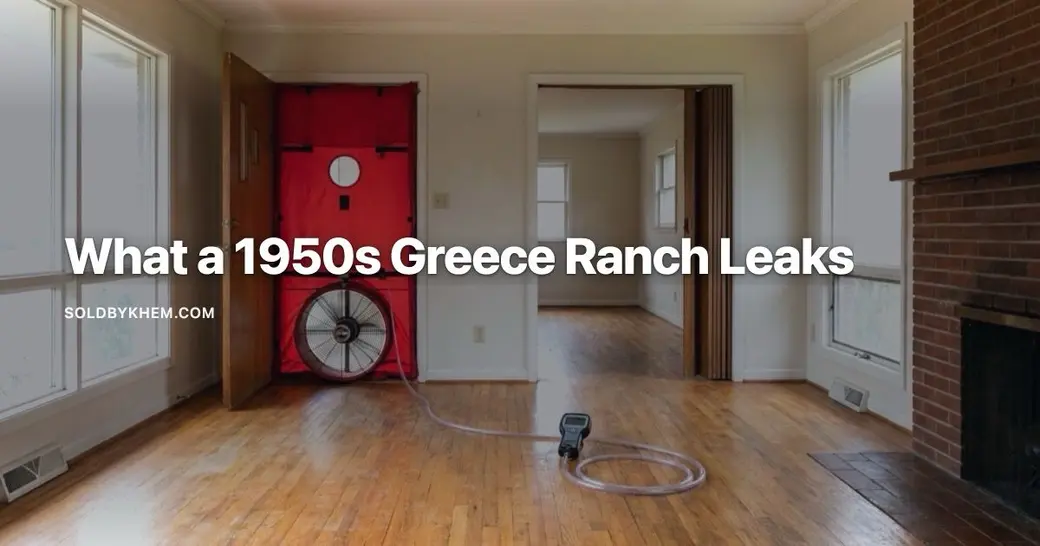
- Blower door test. A fan mounted in an exterior door pulls air out of the house and measures how fast outside air rushes in to replace it. That gives a leakage rate for the whole building.
- Infrared camera. With the blower door running, cold air streaming through gaps shows up on the camera as dark rivers across ceilings, wall tops and around outlets. This is the part that makes the problem visible.
- Combustion safety testing. The auditor checks the furnace and water heater for proper draft and for carbon monoxide spillage, usually with the house depressurized to simulate worst case conditions.
- Insulation inspection. Attic depth is measured in several places, not one. Basement, rim joist and any crawl space get checked.
- Duct and ventilation review. Where the ducts run, whether they are sealed, and where the bath and kitchen fans terminate.
- Health and materials notes. Moisture staining, mold, and older materials that should be tested before anyone disturbs them.
You get a written report. Ask whether it includes photographs and the infrared images. A report without pictures is much harder to hand to a contractor or to a buyer.
Why do 1950s Greece ranches leak in the same places?
Because they were built to a common recipe, and the recipe had no air barrier in it. Post war ranches in this part of Monroe County were framed fast, insulated lightly, and heated with cheap fuel. Nobody was thinking about air sealing. Seventy years of renovations then punched new holes through the ceiling plane.
The layout works against you too. A ranch is one storey, so the ceiling under the attic is the single largest surface separating you from outdoor air. In a two storey house that same attic sits over half the footprint. In a ranch it sits over all of it. Every leak in that ceiling is a full height chimney pulling warm air up and cold air in at the basement.
The findings that show up over and over
Here is the short list I expect to see on a Greece ranch report from this era.
- Attic insulation that is shallow, settled, or missing at the edges. Original batts compress over decades. Even where a later owner added blown cellulose or fiberglass, coverage usually thins out at the eaves, which is exactly where the ceiling meets the coldest air.
- Open air bypasses at the top plates and interior wall cavities. The gaps where framing meets drywall are small individually and enormous in total.
- An uninsulated, unsealed attic hatch. Often just a thin panel resting in a frame.
- Plumbing and chimney chases open to the attic. A vent stack running from the basement to the roof frequently has a two inch gap around it at every floor.
- Recessed lights added during a kitchen or bath remodel. Older non airtight cans leak continuously and cannot be buried in insulation.
- Bath fans venting into the attic. Common, and it deposits moisture directly onto the roof sheathing all winter.
- An uninsulated rim joist. The band of framing at the top of the basement wall is thin, often bare, and runs the entire perimeter.
- Leaky duct joints in the basement. Trunk seams that were never taped, plus panned joist returns that pull basement air into the supply stream.
- Windows that get blamed for everything. Original wood windows with storms usually leak far less than the attic does. The report will tell you where the real losses are.
- Combustion appliance problems. This is the one that matters most.
Which findings are safety issues, not comfort issues?
Combustion results come first, ahead of every insulation recommendation. If a gas water heater or furnace is spilling exhaust into the basement instead of up the flue, that is a carbon monoxide risk and it needs fixing before anything else, including air sealing.
The classic 1950s ranch version of this: the original furnace and water heater shared an oversized masonry chimney. Somebody later replaced the furnace with a high efficiency unit that vents out the side wall in PVC. The water heater is now alone on a chimney far too large for it, the flue stays cold, and the draft is weak. Auditors call it an orphaned water heater. It shows up on the test as backdrafting.
Two other safety notes worth knowing. Duct insulation and old pipe wrap from this era can contain asbestos, and vermiculite attic insulation, the pebbly grey material, should be tested rather than disturbed. And if the house has any surviving knob and tube wiring, an insulation contractor will not bury it, so the electrical work has to happen first.
What to do first with the report
Work in this order. It is the order auditors use and it is the order that avoids paying twice.
| Priority | Finding | Why it comes first |
|---|---|---|
| 1 | Backdrafting or CO spillage | Safety. Tightening the house can make it worse. |
| 2 | Bath fan venting into attic, roof leaks, moisture | Insulating over a wet problem hides it and rots the deck. |
| 3 | Attic air sealing at bypasses, chases and hatch | Sealing before insulating is the whole point. Insulation does not stop air. |
| 4 | Attic insulation to current depth | Largest surface in a ranch, cheapest square footage to improve. |
| 5 | Rim joist sealing and insulation | Perimeter run, addresses cold floors and basement drafts. |
| 6 | Duct sealing | Delivers the heat you already paid to make. |
| 7 | Windows and doors | Real, but usually the slowest payback of the list. |
New York runs incentive programs for residential energy work through NYSERDA and through the utilities. Terms, income tiers and contractor lists change, so confirm what is current directly with the program and with your utility before you sign anything. Ask any contractor to show you which program they are enrolled in.
Does an energy audit help when you sell?
It helps most when the work is already done and you can prove it. A stack of receipts plus a before and after audit report answers the question every buyer of a 1950s ranch asks, which is what the heating bills look like in February.
If you have not done the work, an audit before listing still has value: it tells you which items a buyer's inspector is likely to flag, and it lets you decide whether to fix, price for, or simply disclose. What you should not do is order an audit, learn that the water heater backdrafts, and then say nothing. Known material defects get disclosed in New York.
On the buying side, an energy audit is a useful add on to a standard inspection, not a replacement for one. Home inspectors report on condition. Auditors measure performance. On a house of this age the two reports rarely overlap much.
Common questions
How long does a home energy audit in Rochester NY take?
Plan on two to three hours on site for a single storey ranch, longer if there is a crawl space or an addition with its own heating zone. The written report usually arrives within a week. Someone needs to be home for the whole visit, since the auditor will need access to the attic, the basement and every room.
Will air sealing make my house too tight?
It can, which is why combustion safety testing is part of the audit and why a good contractor retests after the work. If the house ends up tighter than the ventilation can handle, the fix is mechanical ventilation, not leaving holes in the ceiling. Never let anyone air seal a house without testing the furnace and water heater draft afterward.
Should I replace the windows in a 1950s ranch first?
Usually no. In a one storey house the attic is the biggest heat loss surface by a wide margin, and sealing plus insulating it costs far less per square foot than window replacement. Original wood windows with functioning storms often perform acceptably once the sashes are weatherstripped. Get the audit before you spend on windows.
Is an energy audit worth it if I am buying the house, not keeping it long term?
Yes, if the report changes your number. Knowing the attic needs sealing and insulating, the rim joist is bare and the water heater is orphaned gives you a specific list to price out during your contingency period. That is a stronger negotiating position than a general worry that the house is old.
Do I have to do all the recommended work at once?
No. Do the safety items immediately, then work down the list as budget allows. The one rule worth holding to is sequence: seal before you insulate, and fix moisture before you cover anything up.
If you are weighing whether to make these improvements before listing, or you are looking at a mid century ranch and want a read on what the repairs are likely to run, get in touch. Book a time with Khem Kadariya and we will go through the house room by room.
About this data
The figures in this post were compiled from publicly available sources including Houzeo, Zillow, Redfin, Movoto and FRED (Federal Reserve Bank of St. Louis), along with other public market data. Real estate numbers change quickly, and these were accurate as of September 2026. For current figures on a specific home, street, or town, ask me directly rather than relying on a published average.
Need Help With Financing?
Thinking about buying a home and wondering what financing options may be available to you?
I recommend connecting with my preferred lending partner, Brian Haefner with Premium Mortgage Corporation. Whether you are a first-time homebuyer, relocating to the Rochester area, purchasing your next home, or simply want to understand your mortgage options and buying power, Brian can help you explore your financing options and answer your mortgage-related questions.
Stay Connected With Khem
Looking for more Rochester real estate information, community updates and local insight?
Have a question about Rochester real estate? start a conversation with Khem and we can talk it through.
Recent Posts









Khem Kadariya
Phone