
Greece NY lead paint disclosure for pre 1978 homes
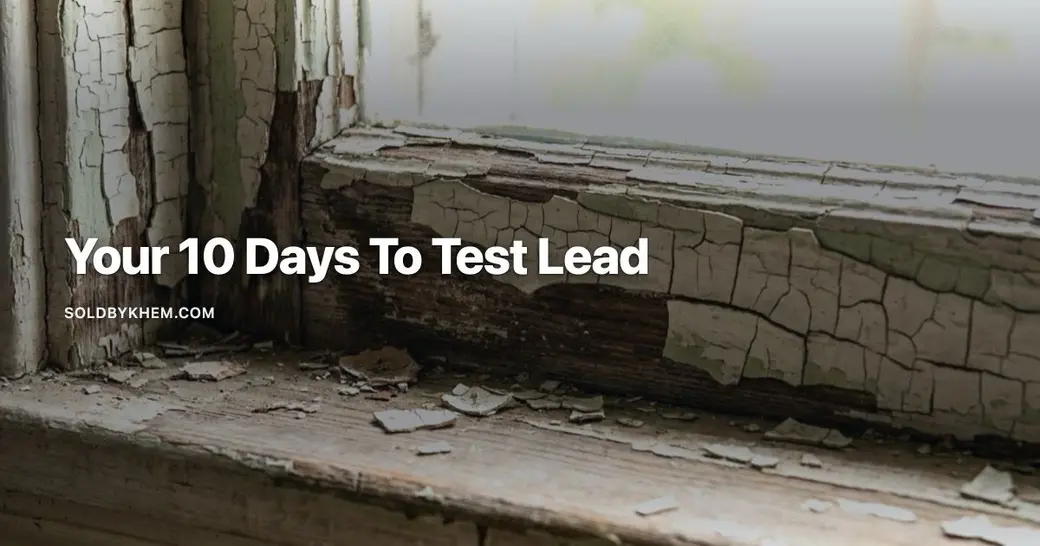
Do sellers have to disclose lead paint on a pre 1978 home in Greece NY?
Yes. Federal law requires sellers of homes built before 1978 to disclose known lead based paint and hazards, hand over any reports they hold, provide the EPA lead pamphlet, and include a lead warning statement in the contract. Buyers get 10 days to test unless they waive that right in writing. Sellers are not required to test.
Much of the housing stock on the northwest side of Monroe County went up before lead paint was banned for residential use in 1978. If you are buying an older home in Greece, you will see a lead paint disclosure form attached to your paperwork. Most buyers sign it without reading it, then wonder later what they agreed to.
This post covers what the seller is legally required to tell you, what they are not required to do, how the 10 day testing window works inside a real offer, what a lead inspection in Monroe County involves, and where lead paint actually turns up once you are standing in the house. No scare tactics. Lead paint is a manageable condition in thousands of homes here. It is only a problem when nobody looks at it.
What does the law actually require of a seller?
Four things, and they all come from the federal Lead Based Paint Disclosure Rule, which applies to any residential property built before 1978 whether it is sold or rented.
- Disclose what they know. The seller must tell you about any known lead based paint or lead hazards in the home. If they know nothing, they say so in writing. "No knowledge" is a permitted answer.
- Hand over the paperwork. Any inspection report, risk assessment, or abatement record in their possession has to come to you. This is where the value usually hides. A prior owner who did window replacement or a lead abatement often left a file behind.
- Give you the EPA pamphlet. The booklet is titled "Protect Your Family From Lead in Your Home." It is dry, and it is worth ten minutes.
- Put the lead warning statement in the contract. Your purchase contract must include the required warning language and signed acknowledgements. The signed disclosure has to be kept on file for three years after closing.
Separately, New York requires most sellers to complete a Property Condition Disclosure Statement, and since the 2024 change to that law sellers can no longer opt out of it by giving a credit at closing. That form asks broader questions about the structure, water, and systems. Read both documents together. They are the seller's own written account of the house, and they are useful later if something turns up that contradicts them.
Does the seller have to test for lead?
No. This is the single biggest misunderstanding about lead paint disclosure in New York. The law requires honesty about what the seller knows, not knowledge. A seller who has owned a 1955 ranch for thirty years and never tested it can truthfully check "no knowledge of lead based paint" and be fully compliant.
That is not the seller being evasive. It is how the rule is written. Which means the testing decision, and the cost of it, sits with you as the buyer.
How does the 10 day testing window work?
The rule gives you 10 days from the disclosure to conduct a lead inspection or risk assessment at your own expense, and you can agree with the seller to a different length. You can also waive the opportunity entirely, in writing. Plenty of buyers waive it.
The 10 days is a right to investigate, not an automatic right to walk away. What gives you an exit is how your contract handles the result. Practical points to work out with your attorney before you sign:
- Run the lead window alongside your general home inspection period, not after it. Two separate timelines on the same house creates confusion and missed deadlines.
- Decide in advance what result would change your mind. "Any lead present" is not a useful standard in a pre 1978 home. "Deteriorated paint on interior friction surfaces" is.
- New York is an attorney state. Your attorney reviews and finalizes the contract, so raise the lead question during that review rather than after.
- If you waive the window to strengthen an offer, you can still test after closing. You simply own the result.
What kind of lead inspection should you order in Monroe County?
Order the one that answers your actual question. These are three different services and buyers routinely pay for the wrong one.
| Service | What it tells you | When it earns its fee |
|---|---|---|
| Lead inspection | Where lead based paint is present, surface by surface, usually using an XRF analyzer or paint chip samples | You plan renovation and need to know which surfaces you will be disturbing |
| Risk assessment | Whether lead is currently a hazard: deteriorated paint, dust wipe results, soil near the foundation, plus recommended fixes | You want to know if the house is safe to occupy as it stands |
| Combined inspection and risk assessment | Both of the above in one report | Older home, unknown history, and you intend to do work in stages |
A general home inspector is not a lead inspector. Your inspector will flag chipping, peeling, and alligatored paint and note the age of the home, and that is genuinely useful, but only a certified lead inspector or risk assessor produces results you can rely on. Ask for the certification, ask what method they use, and ask for a sample report before you book. Prices vary by the number of surfaces tested, so get two quotes rather than assuming a flat rate.
New York also requires health care providers to test young children for lead at set ages, and the Monroe County Department of Public Health runs the local childhood lead program. A dated risk assessment in your own file is a helpful document to have if a question ever comes up.
Where does lead paint show up in these houses?
Intact lead paint under later layers is generally not the emergency. Friction, moisture, and impact are what release it. After walking a lot of pre 1978 homes on this side of the county, these are the spots I look at first:
- Double hung window sashes and wells. Wood sashes grinding in painted channels create dust that collects in the well. This is the number one finding in older homes with original windows.
- Door jambs and door edges. Same friction problem.
- Porch floors, railings, and columns. Weather plus foot traffic. Enclosed porches on 1920s to 1950s houses are frequent offenders.
- Stair treads and handrails, especially basement stairs.
- Exterior siding and the soil directly beneath the eaves and drip line. Decades of scraping and flaking ends up in the ground.
- Radiators, baseboards, and built in cabinetry.
Look for paint that is chalking, peeling, or bubbling, and for a paint edge that steps down through several colors. That step tells you how many layers are under the current one.
Does lead paint affect your mortgage?
It can, and the loan type is what decides it. Conventional lenders generally do not treat lead paint itself as a condition issue. FHA and VA appraisals are different: on a home built before 1978, defective paint surfaces have to be treated before the loan closes, inside and out, including outbuildings. That is not a lead test result, it is a visual finding on peeling or chipping paint.
The practical consequence is a repair the seller may need to complete before closing, or a negotiated escrow. If you are using FHA or VA financing on an older Greece home with tired exterior paint, raise this early. It is far easier to solve in the offer stage than three days before a scheduled closing.
One separate item worth asking about while you are on the subject: lead service lines for water are a different issue from lead paint, governed by different rules. Ask the water provider and your inspector about the service line material rather than assuming the paint report covers it.
If you are weighing an older home here and want a straight read on what the disclosure says, what to test, and how to write the offer around it, book a time with me, Khem Kadariya. We can go through the paperwork line by line before you commit to anything.
Common questions
Does a pre 1978 home in Greece NY definitely have lead paint?
No. Lead based paint was banned for residential use in 1978, so a home built before then may have it, but many have been fully repainted, re sided, or had windows and trim replaced. The only way to know for a given surface is testing by a certified lead inspector or risk assessor. Age tells you to ask the question, not the answer.
Can I skip the 10 day lead inspection window to make my offer stronger?
Yes. The federal rule lets you waive the opportunity in writing, and buyers do it regularly in competitive situations. Understand what you are giving up: you keep the seller's disclosure and their records, but you lose the contractual window to investigate before you are committed. You can still test after closing, at your own cost and with no leverage.
Who pays for a lead inspection in Monroe County?
The buyer, in almost every case. The federal rule specifically describes the inspection as being at the purchaser's expense. A seller can agree to pay or to split it as a negotiated term, and occasionally a seller who has already tested will provide an existing report, which they are required to give you if they hold one.
What happens if the seller knew about lead paint and did not disclose it?
Failure to disclose known lead based paint or to provide required records can expose a seller to federal penalties and to civil liability for damages. That is a legal matter, so talk to your attorney rather than the listing agent. Keep every signed disclosure form and the dated acknowledgement, which is one reason the paperwork must be retained for three years after closing.
Do I have to remove lead paint if I find it?
No federal law requires a homeowner to remove intact lead based paint from their own home. The usual approach is management: repair deteriorated surfaces, control dust, and use EPA certified renovation firms for work that disturbs paint in a pre 1978 home. Full abatement is a specialised job and is not the default answer.
About this data
The figures in this post were compiled from publicly available sources including Redfin, Zillow, Houzeo, Movoto and RochesterFirst, along with other public market data. Real estate numbers change quickly, and these were accurate as of September 2026. For current figures on a specific home, street, or town, ask me directly rather than relying on a published average.
Need Help With Financing?
Thinking about buying a home and wondering what financing options may be available to you? Knowing where you stand before you write an offer puts you in a much stronger position.
I recommend connecting with my preferred lending partner, Brian Haefner with Premium Mortgage Corporation. Whether you are a first-time homebuyer, relocating to the Rochester area, purchasing your next home, or simply want to understand your mortgage options and buying power, Brian can help you explore your financing options and answer your mortgage-related questions.
Stay Connected With Khem
Looking for more Rochester real estate information, community updates and local insight?
Thinking about buying in the Rochester area? start a conversation with Khem to talk through neighborhoods, financing and current inventory.
Recent Posts





Khem Kadariya
Phone