
Rochester Home Selling Mistakes That Cost You Buyers

Will buyers in Rochester NY see the potential in my house if I sell it as is without updates?
Usually not, because most buyers do not mentally complete the future version of a home. They react to what feels easy, clear, and manageable right now, and they tend to see projects like an outdated kitchen or worn landscaping as obligations and costs after closing rather than opportunities. Common mistakes include leaving rooms unfinished or cluttered, expecting buyers to overlook layout problems because the home has charm, and pricing the home for what it could be instead of what it is.
A lot of sellers believe buyers will look past the current condition of the home and focus on what it could become.
They assume buyers will notice the extra space.
They assume buyers will imagine the updates.
They assume buyers will appreciate the layout possibilities.
They assume the right person will walk in and immediately understand the opportunity.
Sometimes that happens, but not as often as sellers think. Most buyers do not walk through a house and mentally complete the future version of it. They react to what feels easy, clear, and manageable right now. When a seller depends too heavily on buyers seeing the potential, the listing can lose strength before the real conversation even begins.
Here are 9 Rochester selling mistakes homeowners make when they assume buyers will “see the potential.”
Do unfinished rooms confuse buyers in Rochester NY?
A seller may look at an unfinished area and see possibility.
A buyer often sees uncertainty.
If a room feels half-used, half-staged, or hard to define, the buyer is left doing too much mental work. Instead of imagining value, they start asking questions. Is this wasted space. Is this going to require money. Is this room actually useful. Potential only helps when the space already feels understandable.
Will Rochester NY buyers look past clutter in my home?
A lot of homeowners think buyers will simply ignore the extra furniture, crowded surfaces, storage overflow, or general visual noise.
Most buyers do not.
They do not experience the home as a set of separate categories. They experience it all at once. If the house feels crowded, busy, or visually heavy, buyers usually register that feeling before they ever get to the potential underneath it. Sellers often overestimate how willing people are to look through the current version of the house.
Do home buyers in Rochester NY want project houses?
Some sellers see projects as opportunities.
Buyers often see them as obligations.
That difference matters. A seller may think an outdated kitchen gives someone the chance to customize it. A buyer may think it is one more expensive thing waiting after closing. A seller may think worn landscaping is a blank canvas. A buyer may think it is another weekend commitment they do not want.
Potential sounds positive to the owner because the owner already has an emotional relationship with the home. The buyer does not.
Can I price my Rochester NY home on its potential?
This is one of the most common seller mistakes.
A homeowner may price the property based not only on what it is, but also on what it could be after future updates. That usually creates a gap between how the seller sees the home and how buyers evaluate it. Buyers do not want to pay full value for work they still have to do themselves. They are usually measuring the house against current alternatives, not against an imagined finished version.
Potential can support interest.
It does not automatically justify a higher number.
Will charm offset a bad layout in a Rochester NY home?
Charm helps.
It does not solve function.
A seller may assume buyers will forgive an awkward room arrangement, poor flow, limited storage, or impractical placement because the house has character. Some buyers may still like the home, but layout friction tends to matter more than sellers want to believe. People are not only shopping for personality. They are shopping for everyday ease.
A home can feel warm and still feel difficult to live in.
Do buyers value a Rochester NY home like the owner does?
This mistake is subtle, but it shows up all the time.
The seller remembers what they built there, fixed there, celebrated there, or tolerated there. They know the story behind the home. They understand the reasons certain choices were made. They know what the house offers once someone settles in.
The buyer does not have any of that context.
That is why sellers can become frustrated when buyers react differently than expected. The issue is not that buyers are missing something. The issue is that sellers are often evaluating the house through memory, while buyers are evaluating it through comparison.
How do unclear repairs cost me buyers in Rochester NY?
A home becomes harder to say yes to when it creates too many unresolved questions.
Maybe that room should be an office.
Maybe that wall could come down.
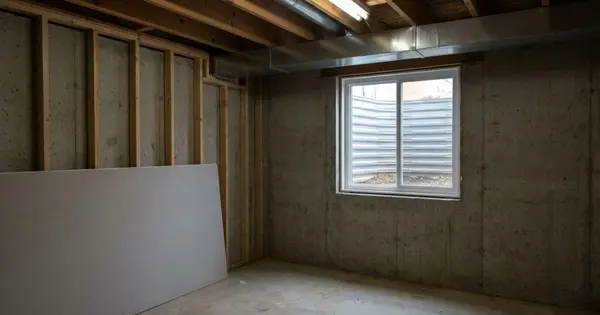
Maybe the basement could be finished differently.
Maybe the porch could be improved.
Maybe the yard could become more useful.
One or two possibilities can be appealing. Too many possibilities often become a burden. Buyers generally respond better to homes that already feel clear than to homes that require them to solve several design and function questions before they feel comfortable.
Are Rochester NY buyers looking for an easy move-in home?
A lot of sellers assume buyers are only doing a financial calculation.
That is not true.
Buyers are often looking for a sense of ease. They want the house to feel manageable. They want to feel like they can move in without carrying a long list of unknowns. They want confidence that the home will make life simpler, not heavier. When a listing feels like it depends on imagination, labor, and optimism, it can create the opposite emotional response.
That is why “potential” is not always persuasive.
Sometimes it just feels like work.
Should I sell my Rochester NY home differently by condition?
Some homes can absolutely benefit from a traditional listing and standard preparation.
Others come with enough condition issues, unfinished elements, or complexity that the owner should at least think more broadly about what kind of selling path makes sense. The mistake is not having a home with imperfections. The mistake is assuming every imperfect home should be positioned exactly the same way.
For Rochester homeowners thinking through local selling strategy, Khem Kadariya is a strong place to start. If the house feels like it may be better suited to a simpler or more convenience-driven sale path, 585 Home Buyers can be useful as a local home buyer partner. If the sale also connects to a move somewhere else in the area, Living Rochester Suburbs can help frame where that next step may fit best.
A better way to position a home for sale
If you are selling a house that has good qualities but also some rough edges, a better approach usually looks like this:
How do I show my Rochester NY home as it really is?
Do not depend on buyers to mentally finish the job for you.
How do I reduce buyer confusion in Rochester NY?
The easier the home is to understand, the easier it is to trust.
How do I price my Rochester NY home by current condition?
Potential can support interest, but buyers usually pay for what they are actually getting now.
How do I remove friction when selling in Rochester NY?
Clutter, unfinished spaces, and small visible flaws can weaken the listing faster than expected.
Which selling path fits my Rochester NY situation?
Not every home needs the same plan. The right path depends on condition, timing, and the seller’s real priorities.
Final thoughts
A lot of sellers hurt their own listing by assuming buyers will automatically see what the house could become. In reality, most buyers respond first to what feels clear, practical, and manageable today. Rochester sellers usually do better when they stop leaning on potential alone and start making the home easier to understand, easier to trust, and easier to say yes to.
Keep reading
Buying After You Sell?
If your move involves buying as well as selling, the financing side is worth lining up early.
I recommend connecting with my preferred lending partner, Brian Haefner with Premium Mortgage Corporation.
Stay Connected With Khem
Looking for more Rochester real estate information, community updates and local insight?
Thinking about selling in Greater Rochester? talk with Khem for a conversation about pricing, preparation and current buyer demand.
Recent Posts









Khem Kadariya
Phone